
Mini-Split Services in Leander, TX
When mini-split service can't wait in Leander, the call routes by ZIP code to a contractor registered for this market — where local equipment is sized around a 100°F design day and months of 100-degree heat write the service calendar. This referral line routes by ZIP code to an independent TX contractor; it does not set fees or schedules, so ask for both on the call.
Climate figures are regional: rounded from NOAA 1991–2020 normals for Austin / San Antonio, TX, shared by every market in that region; design temperatures are regional planning values. Coverage counts come from the routing data dated July 12, 2026. See our methodology.
U.S. Census Bureau, American Community Survey 2023 5-year estimates (tables B25003, B25024, B25035), city-level. These four figures are specific to Leander.
Electric utility on record for Leander ZIP codes: Pedernales Electric Coop, Inc (cooperative, 2023 average residential rate 11.7¢/kWh); Bartlett Electric Coop, Inc (cooperative, 2023 average residential rate 15.7¢/kWh); and Austin Energy (municipal, 2023 average residential rate 13.0¢/kWh). U.S. Department of Energy / OpenEI, “U.S. Electric Utility Companies and Rates: Look-up by Zipcode (2023)” (EIA-861 data), read 2026-09-12; matched to the ZIP codes on record for this city in the routing data. A rate is the utility's 2023 residential average, not your tariff.
Incentive programs on record at DSIRE for Leander (read 2026-09-12): Austin Energy - Home Energy Savings Rebate Program; Austin Energy - Home Energy Savings Loan Program; Austin Energy - Weatherization Assistance Loan Program; Austin Energy - Multi-Family Energy Efficiency Rebate Program. Programs whose owner is the electric utility on record for a Leander ZIP code, or Leander itself. Names and links only; amounts and eligibility are on DSIRE’s program page (Texas listing). Ask the contractor which program it will file for and the date of the terms it quotes.
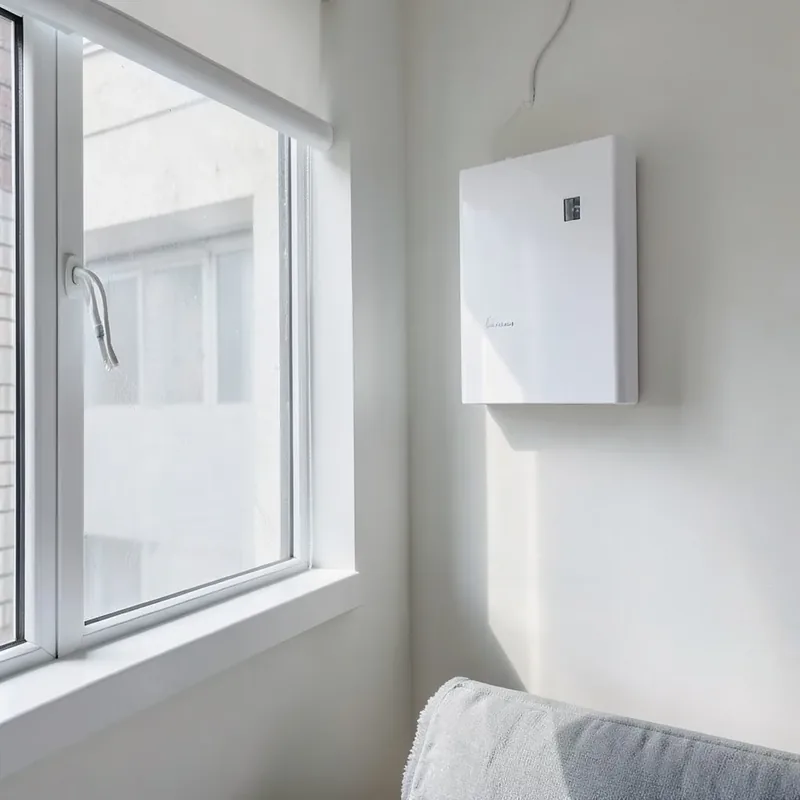
What climate and housing drive Leander service calls?
The Austin / San Antonio, TX normals describe the regional climate around Leander: about 1,600 heating degree days against 3,150 cooling degree days annually, with regional design temperatures spanning 28°F to 100°F. Summers mean months of 100-degree heat, winters mean mostly mild conditions with occasional hard freezes.
What hangs in local utility closets is regional, and this is an editorial note rather than a dataset: Heat pumps and gas-electric splits are common in the newer subdivisions across the region; builder-installed equipment of similar age is often seen across a neighborhood. Your own equipment's age is on its data plate, and the ducts are what a contractor should actually read.
The routing promise for Leander is narrow and specific: 3 ZIP codes, each registered by an independent Texas contractor as working territory in the routing data. That data did not include an after-hours category here. No contractor pays to appear on this page; a referral fee may be paid when a routed call is accepted.
Leander is a compact multi-zip market in this network — 3 ZIP codes with both heating and cooling lines, and duct services on record. Coverage continues into Cedar Park and Liberty Hill, which appear in the same routing data. These are routing facts from a dated export (the date is stated below), not marketing: they say which category a contractor registered for, and nothing about how fast one arrives.
Coverage statements on this page reflect the routing data on file as of July 12, 2026; the contractor confirms availability on the call.
Is mini-split service on record for your Leander ZIP code?
Checks whether your ZIP code appears for air conditioning (the category that covers mini-split work) in the routing data dated July 12, 2026. It does not check availability, count contractors, or state a response time.
Source: routing data on record as of July 12, 2026. No prices, contractor names or counts are published.
Symptoms that lead to this call in Leander, and what they usually mean
A room the main system never reaches
Bonus rooms, additions, and converted garages are the classic single-zone use case.
No ducts and no appetite for adding them
Older homes with boilers or baseboards get modern cooling and heating without tearing walls open.
Existing mini-split dripping water down the wall
A clogged condensate line or failed pump — common, minor, and urgent for the drywall’s sake.
A head blinking an error code and refusing to run
Communication faults and sensor errors; brand-specific codes make model info useful when booking.
A mini-split that cools weakly after years of service
Fouled blower wheel and coil inside the head — deep cleaning restores capacity surprisingly often.
What should you expect when you call?
-
Describe the project
Age of the current system, rooms that never worked, fuel type, timeline — replacement in Leander is a design job, and context shapes quote quality.
-
A design visit, not a pitch
The contractor who calls back registered Leander as territory. Ask for its license number and certificate of insurance before the visit; it is a normal question to ask.
-
Numbers precede dollars
A legitimate quote follows a load calculation (Manual J) and, for ducted systems, a duct check — ask for model numbers, scope, permits, and commissioning steps in writing.
-
No exclusivity, ever
Take the quote and set it against any competitor. The job goes to whoever earns it on scope — that is how this is supposed to work.
How does mini-split services pricing work in Leander?
Pricing is set by the independent contractor — never by this site, which takes no part in the quote and adds nothing to your bill. The contractor decides its diagnostic fee, whether that fee credits toward a repair, any after-hours premium, and its parts and labor rates. What this page can do is tell you what to ask before you agree to a visit.
Ask the questions below on the phone. A contractor that answers them plainly is easy to compare against any other bidder; one that cannot say what the visit costs until it arrives has told you something useful too. You are not obliged to book, and comparing bids is your right.
| Ask | When | Why it matters |
|---|---|---|
| Is the in-home estimate charged? | On the phone, before booking | Known before anyone comes out |
| Will the quote show the load calculation and the model numbers? | When you book | A size copied from the old unit is a guess; model numbers can be checked |
| Can I have scope, permits and commissioning steps in writing before work begins? | Before authorizing | A one-line quote hides what a full one shows |
| Who pulls the permit and schedules the inspection? | In the quote | Decides who is responsible if the inspection finds a fault |
Researching typical national figures first? Read Mini-Split Cost: Single Zone to Whole Home — the itemized national breakdown, kept separate from this routing service.
Timing mini-split service around the Leander season
The regional cooling season sets the rhythm: around Austin / San Antonio, months of 100-degree heat concentrate the hardest running into narrow windows, and the first real heat wave is when a marginal system is most likely to fail. Whether that changes a contractor's lead time or price is a question for the contractor.
Quotes gathered before the season can be compared calmly: ask for the scope in writing, and ask each bidder how long the price holds.
Nothing on this page can say what is in your utility closet or how old it is. The data plate and a pre-season inspection can.
Pricing a new system for Leander?
A local bid costs one phone call and obligates you to nothing.
Call (877) 565-3062What separates a good install from an expensive one?
The equipment brand matters less than the installation decisions around it: a load calculation instead of a driveway guess, ducts measured for the airflow the new system actually needs, refrigerant charge and airflow verified with instruments at commissioning, and the permit pulled rather than skipped. Two crews installing the identical unit can deliver measurably different efficiency for its entire service life.
Read competing bids by scope, not bottom line. Model numbers for every component, line-set and drain handling, electrical work, permit responsibility, commissioning steps, and the labor warranty — in writing. A low bid is often low because something on that list is missing, and the missing item is rarely missing by accident.
The shared mini-split services guide covers what the service involves, when it is an emergency, how to compare written proposals, and the call-preparation tool — kept in one place rather than repeated on every city page.
What to have ready when the contractor calls back
Everything below is something to have ready or to note down — not a diagnosis. Before your mini-split service visit in Leander:
- The age and fuel type of the current system (a photo of each data plate), and which rooms never worked right.
- Where the ducts run and whether they are accessible, and where the outdoor unit and the indoor equipment sit.
- Any prior quotes, permits or inspection records for the existing system.
- Your winter and summer comfort complaints, written down, so the load calculation can be checked against them.
- Clear access to the equipment, the attic hatch and the electrical panel.
Which terms will your Leander contractor use on this job?
HVAC Zoning
HVAC zoning divides a home into independently controlled comfort areas. Ducted zoning uses motorized dampers in the ductwork and multiple thermostats, directing one system’s airflow only where called. Ductless systems zone natively — each mini-split head is its own zone with its own setpoint.
Variable-Speed HVAC
Variable-speed (inverter-driven) HVAC equipment modulates its output continuously — a compressor running at anywhere from roughly 25% to 100% capacity, paired with a blower that matches — instead of the on/off blasting of single-stage systems. The equipment runs longer, gentler cycles that hold temperature within a fraction of a degree.
Condensate Line
The condensate line is the drain that carries away the water an air conditioner strips from household air — often five to twenty gallons a day in humid weather. Condensation forms on the cold evaporator coil, collects in a pan beneath it, and flows out through this small PVC line to a drain or outside.
Whole-home dehumidifier
A whole-home dehumidifier is a ducted appliance that removes moisture from household air independently of the air conditioner, draining the water it extracts. It exists for the loads AC handles poorly: humid climates in mild weather, tight houses, crawlspaces and basements, and oversized cooling systems that cool the air faster than they can dry it.
Every term links to its full glossary entry — the practical homeowner angle included. All 50 terms →
Vetting a mini-split service contractor in Texas
Every contractor this line routes to is an independent Texas business responsible for its own licensing, insurance and workmanship. This site cannot promise what any of them will say or do; it can tell you what to ask:
- Ask which license or registration covers this work at your address and for the number on the estimate; the Texas lookup this site has read is linked in the license section — check the number there before work begins.
- Ask for the certificate of insurance (liability and workers’ compensation) before the visit, and keep a copy.
- Ask for a load calculation (ACCA Manual J or equivalent) for your house, with the result on the proposal — not a size copied from the old unit.
- Ask for model numbers for every major component and the AHRI certificate number, so the certified rating can be looked up.
- Ask that the scope, permit responsibility, commissioning steps and what is excluded are all written on the proposal.
- Ask for the labor warranty term in writing and who registers the manufacturer parts warranty.
- Compare at least one competing written bid on the same scope before authorizing major work; you are not obliged to hire the contractor the call reaches.
None of this is adversarial. A Texas pro who states fees on the phone, shows what failed and writes scope you can shop has nothing to fear from a checklist; the visit goes faster with an informed homeowner on the other side of it. A contractor who bristles at verification has answered the most important question before any work began.
What license should the contractor hold in Texas?
Texas requires a license for this work at the state level, through the Texas Department of Licensing and Regulation. The agency states:
“Contractors who install, repair, or maintain systems related to air conditioning, refrigeration, or heating must have a TDLR license and ACR companies must employ an ACR contractor in each permanent location.”
Before work begins, look the contractor up in the TDLR Active License Search (search by name or business, license number, city, county or ZIP code). Ask for the license number on the estimate.
Source: Air Conditioning and Refrigeration Contractors Homepage (TDLR), read 2026-09-06.
Federal rule, every state: under Clean Air Act Section 608, “technicians who maintain, service, repair, or dispose of equipment that could release ozone depleting refrigerants into the atmosphere must be certified.” Ask to see the technician’s EPA 608 card when refrigerant is handled.
Source: Stationary Refrigeration and Air Conditioning | US EPA, read 2026-09-06.
Mini-Split Services in Leander — common questions
Do mini-splits really heat as well as they cool?
Modern units, yes — nearly all are full heat pumps, and cold-climate models hold capacity to well below zero. Sizing is the catch: a head sized only for a room’s cooling load can fall short of its heating load in a northern winter. Make sure the quote states heating capacity at your design temperature, not just nominal BTUs.
How often do mini-split heads need cleaning?
Wash the mesh filters monthly in heavy use — homeowners can do that. The deeper issue is the blower wheel and coil, which accumulate a biofilm-dust coat over 2–4 years that quietly cuts capacity and can smell musty; that is the professional deep-clean. If airflow feels weaker than the fan speed suggests, or there is a sour smell on startup, it is due.
Why is my mini-split leaking water down the wall?
The head produces condensate constantly in cooling mode, and it leaves through a small gravity drain (or condensate pump) that clogs with algae over time. When it backs up, the drain pan overflows down your wall. It is a quick professional fix and preventable with periodic drain treatment — but not something to ignore, since drywall and mold damage compound quickly.
Are the DIY mini-split kits a good idea?
They are legitimate products with a real trade-off: the pre-charged line sets make installation feasible, but many manufacturers’ warranty terms require professional installation, and errors in vacuum or charge cost efficiency for years without announcing themselves. Read the warranty terms of the specific kit before buying; the install premium buys the warranty and the commissioning.
Why does the first heat wave matter for AC in Leander?
Because months of 100-degree heat put every part under full load at once, and a part that was marginal in mild weather is the one that fails then. With roughly 3,150 cooling degree days a year in this region, a pre-season check that records charge, coil and drain condition and any stored error codes lets you fix a weak part on your own schedule rather than during the peak.
Does this page know what equipment is in my Leander home?
No. The regional notes describe what is commonly installed around Leander, not what is in your house. A photo of the data plate and a look at the ducts tell a contractor where your own system sits, so have both ready for the call.
Does the weather here change what mini-split service costs?
This site cannot say what any contractor charges, in any season. What the regional figures do say is when the load peaks — 1,600 heating and 3,150 cooling degree days a year, concentrated in first-stress weather — so a planned job booked outside that peak is a question worth asking about. Ask the fee, the earliest visit and any after-hours premium before you agree to a visit.
Who actually shows up when I call?
An independent, third-party contractor whose registered service area covered your TX ZIP code in the routing data. This is a referral service: the contractor sets pricing, runs the visit, and answers for the work, and you owe nothing for the connection itself.
Prefer to talk it through? One call does it
Same ZIP-matched routing: your address picks the independent contractor. Ask its diagnostic fee on the call before agreeing to a visit; this site sets no prices.
Call (877) 565-3062No obligation · compare any quote you receive · how this works