
Heating & cooling help in Ocean View, HI
One number covers 9 HVAC service lines across Ocean View — from a furnace that quit overnight to a planned system replacement. Calls route to independent Hawaii contractors matched to your zip code, with diagnostic fees quoted before dispatch, around the clock.
Climate figures rounded from NOAA 1991–2020 normals for Hilo/Kailua-Kona, HI. See methodology.
Every service we route here
Furnace Repair
Diagnosis and repair of gas, electric, and oil furnaces — ignition failures, short-cycling, blower faults, and no-heat emergencies.
Heating Repair
Whole-home heating diagnosis and repair beyond the furnace — boilers, heat pumps in heating mode, electric resistance heat, and hybrid systems.
AC Repair
Central air conditioning diagnosis and repair — warm air, refrigerant leaks, frozen coils, electrical faults, and compressors that will not start.
24/7 Emergency HVAC
After-hours, weekend, and holiday routing for no-heat and no-cool emergencies — when the temperature inside becomes a safety problem, not a comfort one.
AC Installation
Central air conditioning replacement and first-time installation — load calculation, right-sizing, and matched indoor/outdoor equipment.
Furnace Installation
Gas and electric furnace replacement — high-efficiency condensing upgrades, correct sizing, and safe venting.
HVAC Maintenance
Seasonal tune-ups and inspections for heating and cooling systems — the cheapest insurance against a mid-season failure.
Heat Pump Services
Heat pump installation, repair, and maintenance — including cold-climate systems, dual-fuel setups, and electrification retrofits.
Mini-Split Services
Ductless mini-split installation and repair — single rooms, additions, garages, and whole-home multi-zone systems.
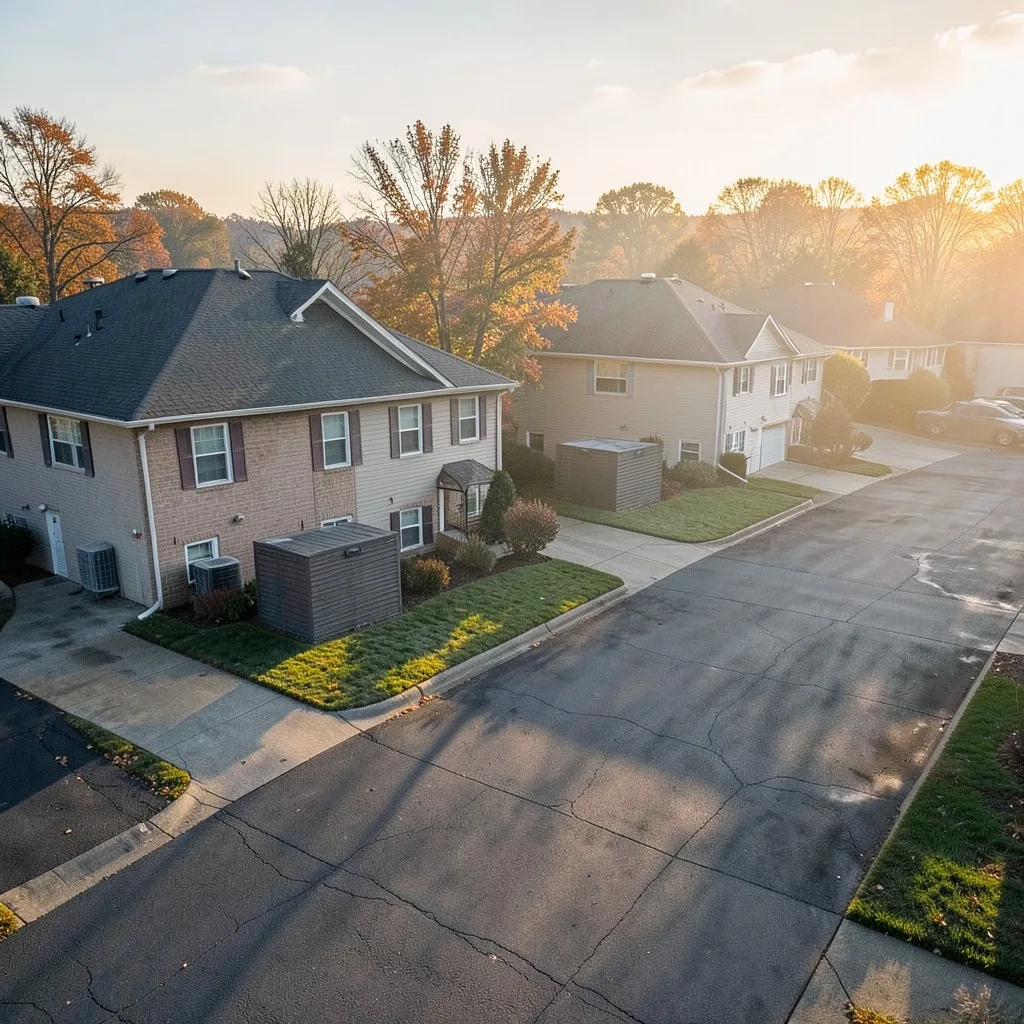
What routing looks like in the field
What shapes HVAC work around Ocean View
The Hilo/Kailua-Kona, HI normals tell the story of what HVAC endures around Ocean View: about 0 heating degree days against 3,200 cooling degree days annually, with design temperatures spanning 58°F to 87°F. Summers mean year-round tropical cooling loads, heavier on the dry Kona side than rainy Hilo, winters mean no heating season at all — and both show up in the local repair queue on schedule.
A Ocean View service call starts with the house, not the unit: median local construction around 1980 means original duct runs, period insulation standards, and equipment rooms built for smaller machines. Ductless mini-splits dominate Big Island homes; salt air and volcanic vog are the equipment killers, and heating simply does not exist.
Every referral here starts from the zip code: Ocean View maps to independent contractors who chose this territory and hold Hawaii licensing for it. The after-hours line is staffed in this market, so weekend and holiday failures still reach a human with a truck.
Crews covering Ocean View stage across the same corridor as Captain Cook and Hawi, which keeps response windows honest. Ocean View itself is a single-zip market — both heating and cooling lines active across one zip plus genuine after-hours routing — and market size shapes service reality: how fast a AC part gets sourced, and how deep the comparison-bid bench runs.
Timing a AC repair call in Ocean View
Demand for AC repair around Ocean View is not flat — it spikes with the first real heat wave, when every marginal system in a 0-HDD/3,200-CDD climate gets stress-tested in the same week. Contractors triage: genuine emergencies first, vulnerable households next, everyone else into a queue measured in days. The same call placed two weeks earlier lands in a calendar measured in hours.
The practical move: treat the first mild-weather symptom — longer cycles, new noises, weaker output — as the booking trigger. Repairs caught pre-season bill at standard rates with parts on the truck; the identical failure during the first real heat wave bills at peak with a wait attached.
One more calendar note specific to this market: with a median local home vintage around 1980, whole neighborhoods share equipment generations — and when a cohort ages out, replacement demand spikes together. Homeowners who quote a season ahead of their system's statistical retirement buy from a calm market; the neighbors who wait buy from a rushed one.
How a Ocean View call works, start to finish
-
Start with the symptom
Warm supply air, a humming outdoor unit, ice on the lines — what you observed in Ocean View tells the contractor what to load on the truck.
-
An AC contractor covering Ocean View
You reach an independent Hawaii company — EPA-certified for refrigerant work — whose service area covers your zip, in a market sized around 87°F design heat.
-
The fee comes first
You hear the visit fee and the queue before committing — no doorstep surprises, no teaser rates.
-
Fixed on the spot, usually
Capacitors, contactors, fan motors, drain clogs — the parts behind most no-cool calls ride on the truck. Bigger diagnoses come with written options.
Tonight problem or tomorrow problem in Ocean View?
The genuine call-right-now list is short and about safety, not comfort: no heat with freezing temperatures outside, no cooling in dangerous heat with infants, elderly, or medically vulnerable people home, anything that smells electrical or burning, a carbon monoxide alarm, or water actively damaging the house. All of those route around the clock in Ocean View — a real on-call rotation answers, with the after-hours fee stated before dispatch.
Everything else — a failure in mild weather, weakening output, a strange new noise, a bill that crept up — books the first regular slot at standard rates. Same contractor, same repair, calmer queue, and the after-hours premium stays in your pocket. Ten honest seconds of triage is the cheapest decision on this page.
Repair or replace — how should a Ocean View contractor frame it?
Age is the axis everything turns on. Equipment in its first decade earns repairs almost automatically — wear parts fail, get swapped, and the system runs on. Past the twelve-to-fifteen-year mark, each major component failure competes with replacement money: the part being replaced is the same age as every part that hasn't failed yet, and modern equipment would also cut every future utility bill.
Three findings should always trigger a replacement conversation rather than a quiet repair: a compromised heat exchanger on a furnace (the failure that ends them), compressor-grade work on an aging cooling system, and any major sealed-system repair on equipment running an obsolete refrigerant. A Hawaii-licensed contractor who raises these honestly in Ocean View — with the failed part and its readings in front of you — is doing the job right. One who patches silently past them is selling you the same failure twice.
Vetting a AC repair contractor in Hawaii
Every contractor in this network is an independent Hawaii business responsible for its own licensing, insurance, and workmanship — and every legitimate pro expects to be verified. The checks below take five minutes and filter out nearly every bad outcome in residential HVAC:
- For after-hours calls: the premium structure quoted on the phone, parts billed at standard book prices.
- Check the labor warranty in writing — 1–2 years on repairs is standard; "we stand behind our work" is not a term.
- Compare at least one competing bid on any major repair or replacement. Contractors who earn jobs on scope expect this; the ones who resent it are telling you why.
- Confirm the license: ask for the number and check it against Hawaii's contractor licensing authority before work begins.
- Ask for the certificate of insurance — liability and workers’ comp. A pro emails it in minutes; hesitation is the answer.
Five minutes of prep that speeds the whole visit
Techs solve faster with context. The five minutes before a Ocean View visit that pay for themselves:
- Any past paperwork: prior repair invoices or tune-up sheets turn guesswork into history.
- Your equipment labels: a phone photo of the data plate on the unit gives the contractor model and age before arrival.
- Clear access: a path to the equipment, the attic hatch, or the crawlspace door saves billable minutes on arrival.
- Pets secured and gate codes shared: the two most common arrival delays, both free to prevent.
- The symptom timeline: when it started, whether it comes and goes, and what (if anything) changed in the house right before.
- The filter situation: when it was last changed and its size — the answer redirects a surprising number of diagnoses.
Something failing right now?
Describe the symptom — routing it to the right Ocean View contractor is the whole job.
Call (877) 565-3062What the pro who answers a Ocean View call signs up for
Hawaii licensing
Independent businesses holding the licenses Hawaii requires — verify the number before work begins; every legitimate pro expects it.
Fees before dispatch
The diagnostic cost, and any after-hours premium, stated on the phone before a truck rolls toward your address.
Diagnosis you can see
The failed part shown with its readings — and on aging equipment, the honest repair-versus-replace conversation.
Comparison welcomed
Written quotes you can shop to any Ocean View competitor. The pros here win on scope, not pressure.
Use this page as your Ocean View index: every service line above links to its dedicated local page with symptoms, seasonal timing, and vetting checklists — or skip the reading entirely and call. Describing the symptom is all the preparation a first call needs.
And if your problem doesn't fit a category neatly — a system that half-works, a noise you can't place, a bill that doubled with no obvious cause — call anyway. Routing ambiguous symptoms to the right trade is precisely the job, and it beats guessing wrong and paying for two visits. The dispatcher has heard every version of "it's making a noise I can't describe" — describe it anyway, and let the routing do its work.
Calling from Ocean View — what to know
Is HVAC Responder a local Ocean View HVAC company?
We are a referral service, not the contractor. When you call, we match your Ocean View zip code to an independent, licensed Hawaii contractor who covers your address and your type of job. That contractor sets pricing, does the work, and stands behind it — and you can compare their quote against anyone.
How does Ocean View heat affect AC sizing and repair?
Local design practice sizes cooling around a 87°F design temperature with about 3,200 cooling degree days a year. Year-round tropical cooling loads, heavier on the dry Kona side than rainy Hilo means marginal components — weak capacitors, fouled coils, low charge — fail during peak load rather than before it, which is why pre-season checks pay off here.
What kind of HVAC equipment is common in Ocean View homes?
Ductless mini-splits dominate Big Island homes; salt air and volcanic vog are the equipment killers, and heating simply does not exist. The median local home dates to about 1980, so contractors here spend as much time on the distribution side — ducts, airflow, controls — as on the equipment itself.
When is the cheapest time to book AC repair in Ocean View?
Off-peak. Locally that means fall through spring — cooling-season weeks price at a premium because calendars fill. Planned work quoted off-peak also gets sharper bids, since contractors are filling calendars rather than rationing them.
Am I committed to anything by calling?
No. The call connects you with an independent local contractor who quotes their diagnostic fee up front. You can book, decline, or take the quote shopping — contractors in this network expect comparison and earn jobs on scope and price, not on capturing your phone number.
Furnace Repair questions Ocean View homeowners ask
How cold does it get in Ocean View, and what does that mean for heating?
Heating systems here are designed against winter lows near 58°F, across roughly 0 heating degree days a year. No heating season at all means a genuine no-heat failure is a same-day problem — and in freezing stretches, a pipe-protection problem too.
What kind of HVAC equipment is common in Ocean View homes?
Ductless mini-splits dominate Big Island homes; salt air and volcanic vog are the equipment killers, and heating simply does not exist. The median local home dates to about 1980, so contractors here spend as much time on the distribution side — ducts, airflow, controls — as on the equipment itself.
When is the cheapest time to book furnace repair in Ocean View?
Off-peak. Locally that means fall through spring — cooling-season weeks price at a premium because calendars fill. Planned work quoted off-peak also gets sharper bids, since contractors are filling calendars rather than rationing them.
Am I committed to anything by calling?
No. The call connects you with an independent local contractor who quotes their diagnostic fee up front. You can book, decline, or take the quote shopping — contractors in this network expect comparison and earn jobs on scope and price, not on capturing your phone number.
Vocabulary that shows up on Ocean View quotes
Hot-Surface Ignitor
A hot-surface ignitor is the ceramic element that lights most modern gas furnaces: it glows white-hot on command, igniting the gas as the valve opens — replacing the standing pilot lights of older designs. As a wear item that heats and cools with every burner cycle, it is the most frequently replaced part on a furnace, typically lasting three to seven years.
Flame Sensor
The flame sensor is a thin metal rod in the burner path that proves to the furnace’s control board that gas actually ignited, by conducting a tiny current through the flame. If it cannot sense flame within seconds of ignition, the board closes the gas valve as a safety measure — even if the burners are visibly lit.
Limit Switch
The limit switch is a furnace safety control that monitors the temperature inside the unit and shuts the burners off if it overheats, while keeping the blower running to cool things down. Repeated limit trips produce short bursts of heat followed by cold-air purges — a pattern easily mistaken for a broken furnace.
Every term links to its full glossary entry. All 50 terms →
Prefer a callback in Ocean View?
Leave your number and an independent Hawaii contractor covering your zip calls you back — fee stated before any visit.
Nearby coverage
Captain Cook · Hawi · Hilo · Holualoa · Honaunau · Honokaa · Honomu · Waikoloa · Keauhou · Kailua Kona