
Insulation in Maple Valley, WA
Need insulation work in Maple Valley? One call routes you to an independent contractor who covers your WA zip code — with the diagnostic fee quoted before any truck rolls. Around Seattle–Tacoma, long, damp heating seasons set the workload, and heating here is engineered against design lows near 24°F, so contractors in this network handle exactly this class of failure all season long.
Climate figures rounded from NOAA 1991–2020 normals for Seattle–Tacoma, WA; design temperatures are regional planning values. See our methodology.
U.S. Census Bureau, American Community Survey 2023 5-year estimates (tables B25003, B25024, B25035), city-level.
What climate and housing drive Maple Valley service calls?
The Seattle–Tacoma, WA normals tell the story of what HVAC endures around Maple Valley: about 4,550 heating degree days against 200 cooling degree days annually, with design temperatures spanning 24°F to 85°F. Summers mean mild summers with heat-dome exceptions that overwhelm AC-less homes, winters mean long, damp heating seasons — and both show up in the local repair queue on schedule.
A Maple Valley service call starts with the house, not the unit: median local construction around 1980 means original duct runs, period insulation standards, and equipment rooms built for smaller machines. Gas furnaces and electric baseboards are giving way to ducted and ductless heat pumps at the fastest rate in the country; insulation upgrades pair with nearly every conversion.
The routing promise for Maple Valley is specific: the local zip code, each registered by an independent Washington contractor as working territory. Daytime routing runs extended hours, and no-heat or no-cool symptoms move to the front. No contractor pays to appear; they pay only when they take a call.
In network terms, Maple Valley runs as a single-zip market: both heating and cooling lines, duct services, and insulation work registered across the local zip. Crews covering Maple Valley stage across the same corridor as Sultan and Duvall, which keeps response windows honest. For you that means insulation work routes to someone who priced this exact market — not a national estimate with your city name pasted in.
What are Maple Valley homeowners describing — and what does it mean?
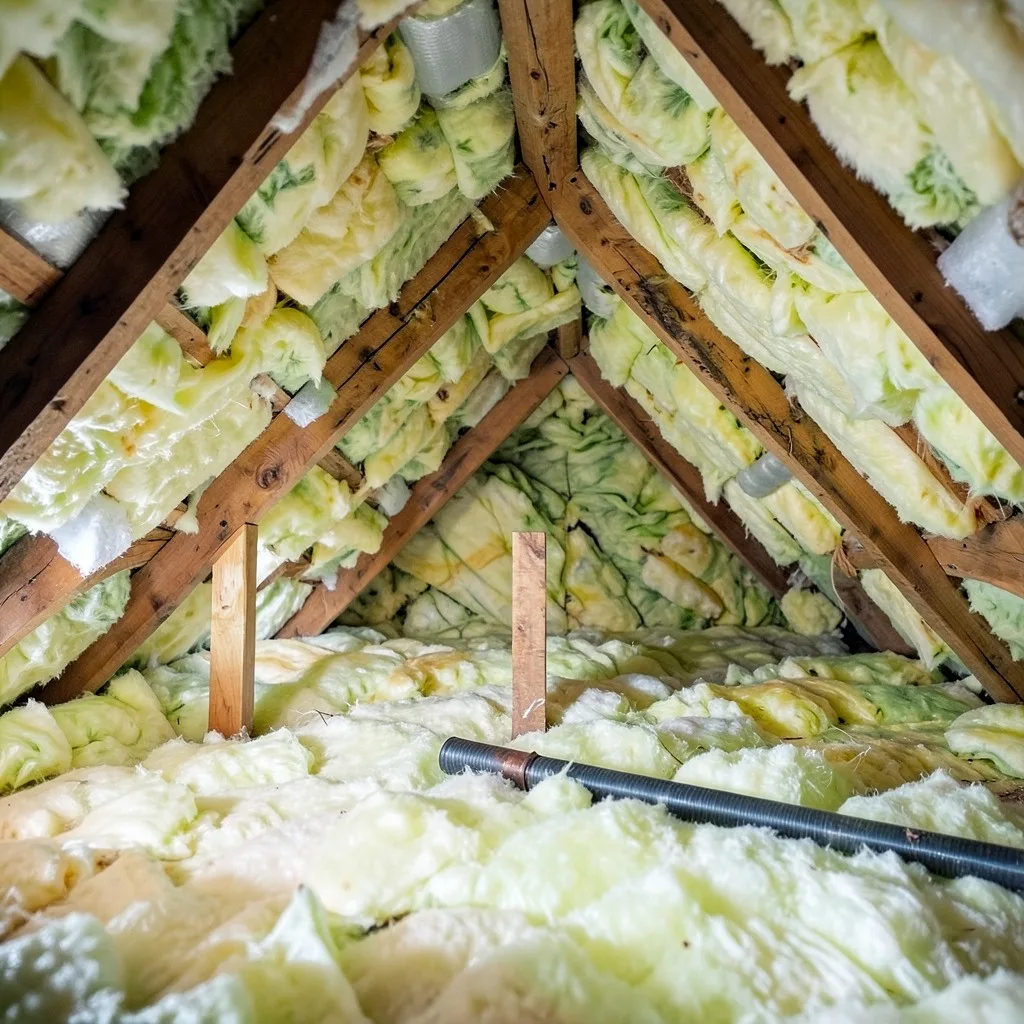
Attic insulation below the joist tops
Almost certainly under R-30; most climates now call for R-49 to R-60 in the attic.
Rooms directly under the roof run hot or cold
The classic thin-attic signature.
Ice dams on the roof edge in winter
Heat escaping through the attic melts snow that refreezes at the eaves — an insulation and air-sealing problem wearing a roofing costume.
HVAC runs constantly on design days
Equipment sized for the envelope you have; improving the envelope is often cheaper than bigger equipment.
Big temperature swings between floors
Stack effect through a leaky attic plane pulls conditioned air up and out.
How does a Maple Valley call work?
-
Describe it room by room
Which Maple Valley rooms fail, what you see at the registers, what changed recently — airflow problems leave fingerprints.
-
Routed to a duct specialist
Your call reaches a local crew that works the distribution side daily, in a housing stock whose median vintage runs near 1980.
-
Numbers first
The test comes before the quote: measured leakage, documented condition, then a scope you can compare across bidders.
-
Verified results
Sealing and repairs end with an after-measurement against the before — proof the fix worked, on paper.
How does insulation pricing work in Maple Valley?
Pricing is set by the independent contractor — never by us — and the ground rules are the same on every call we route: the diagnostic fee is stated on the phone before dispatch, any after-hours premium is named up front, and you receive a written quote you can compare against any other bidder before authorizing work.
That structure isn't generosity — it's how the network stays healthy. A Washington contractor who surprises homeowners at the doorstep stops receiving routed calls, which means the pros who remain are the ones whose pricing conversations survive daylight. You benefit from that selection every time you dial.
| What to expect | When | Why it matters |
|---|---|---|
| Diagnostic fee disclosed | On the phone, before dispatch | No doorstep surprises — the visit price is known before a truck rolls |
| Findings shown, not described | During the visit | The failed part and its readings, in front of you |
| Written quote | Before any work begins | Yours to keep and shop — comparison is expected here |
| Scope itemized | In the quote | Model numbers and labor scope in writing |
Researching typical national figures first? Read Attic Insulation Cost and Payback — the itemized national breakdown, kept separate from this routing service.
When Maple Valley calendars fill up — and how to beat them
The local heating season sets the rhythm: around Seattle–Tacoma, long, damp heating seasons concentrate failures into narrow windows, and the first hard cold snap converts every deferred repair in the area into a same-week emergency simultaneously. Booking against that calendar — shoulder season for planned work, first-symptom for repairs — is the cheapest optimization available.
The practical move: treat the first mild-weather symptom — longer cycles, new noises, weaker output — as the booking trigger. Planned work quoted in the off-season gets sharper bids, because installers are filling calendars instead of rationing them.
One more calendar note specific to this market: with a median local home vintage around 1980, whole neighborhoods share equipment generations — and when a cohort ages out, replacement demand spikes together. Homeowners who quote a season ahead of their system's statistical retirement buy from a calm market; the neighbors who wait buy from a rushed one.
Rooms that never work right?
The problem is usually in the ducts, and it is measurable. Book the test that puts a number on it.
Call (877) 565-3062Should you fix the distribution before blaming the equipment?
Airflow and envelope problems masquerade as equipment failures constantly: rooms that never condition, systems that run endlessly, bills that creep with no rate change. The equipment gets blamed because it's visible — but the ducts, the returns, and the insulation above the ceiling decide how much of the equipment's output ever reaches the living space.
This is why measurement-first contractors win here. A leakage test or static-pressure reading turns the invisible half of the system into numbers, the scope gets written against those numbers, and the after-measurement proves the fix. Distribution work done this way routinely outperforms an equipment upgrade on comfort per dollar — and it makes any future equipment purchase smaller.
Before the truck reaches your Maple Valley address
A prepared homeowner shortens the diagnosis and sharpens the quote. Before your insulation work visit in Maple Valley, pull together:
- The electrical panel location — and whether any breaker has tripped during the failure.
- The symptom timeline: when it started, whether it comes and goes, and what (if anything) changed in the house right before.
- Clear access: a path to the equipment, the attic hatch, or the crawlspace door saves billable minutes on arrival.
- Any past paperwork: prior repair invoices or tune-up sheets turn guesswork into history.
- The filter situation: when it was last changed and its size — the answer redirects a surprising number of diagnoses.
- Pets secured and gate codes shared: the two most common arrival delays, both free to prevent.
Which terms will your Maple Valley contractor use on this job?
Degree Days (HDD/CDD)
Degree days quantify climate load on buildings. Each day’s average temperature is compared to a 65°F base: a 40°F day contributes 25 heating degree days (HDD); an 85°F day contributes 20 cooling degree days (CDD). Summed across a year, they express how much heating and cooling a location demands — Minneapolis logs roughly 7,500 HDD, Miami over 4,000 CDD.
Indoor Air Quality (IAQ)
Indoor air quality (IAQ) describes the healthfulness of air inside a building: particle levels (dust, smoke, allergens), humidity, and gas concentrations (CO, VOCs, radon). HVAC shapes IAQ through filtration, ventilation, and humidity control — the blower and ducts determine what circulates, and how often air turns over.
BTU
A BTU (British Thermal Unit) is the heat required to raise one pound of water by one degree Fahrenheit — roughly the energy in one lit match. HVAC equipment is rated in BTUs per hour: how much heat a furnace can add to a house, or an air conditioner can remove from it, each hour it runs.
ERV / HRV (energy & heat recovery ventilators)
HRVs (heat recovery ventilators) and ERVs (energy recovery ventilators) are whole-home fresh-air machines: they exhaust stale indoor air and pull in outdoor air through a heat-exchange core that transfers most of the outgoing air’s warmth to the incoming stream. An ERV additionally exchanges moisture, tempering humidity as well as temperature.
Every term links to its full glossary entry — the practical homeowner angle included. All 50 terms →
How to verify the pro who shows up
Every contractor in this network is an independent Washington business responsible for its own licensing, insurance, and workmanship — and every legitimate pro expects to be verified. The checks below take five minutes and filter out nearly every bad outcome in residential HVAC:
- Compare at least one competing bid on any major repair or replacement. Contractors who earn jobs on scope expect this; the ones who resent it are telling you why.
- Get the diagnostic fee and its terms (does it credit toward the repair?) stated before the visit is booked.
- Check the labor warranty in writing — 1–2 years on repairs is standard; "we stand behind our work" is not a term.
- Ask for the certificate of insurance — liability and workers’ comp. A pro emails it in minutes; hesitation is the answer.
- For quotes: model numbers, written scope, and permit handling in the document — a one-line quote is a red flag stated politely.
None of this is adversarial — it's how good contractors prefer to work. A Washington pro who quotes fees on the phone, shows the failed part, and writes scope you can shop has nothing to fear from a checklist; the visit simply goes faster with an informed homeowner on the other side of it. The rare contractor who bristles at verification has answered the most important question before any work began.
Insulation in Maple Valley — common questions
Why do insulation contractors keep talking about air sealing?
Because insulation slows conductive heat loss but does almost nothing against moving air, and a typical attic floor is riddled with penetrations — top plates, wire and pipe chases, recessed lights, the attic hatch. Warm air rushing through those gaps carries heat (and moisture) straight past any R-value. Sealing them first typically costs a fraction of the insulation job and multiplies its effect; done after, it is nearly impossible.
How much attic insulation should I actually have?
Current DOE guidance for most of the country is R-49 to R-60 in the attic — roughly 14–18 inches of blown fiberglass or cellulose. The eyeball test: if you can see the ceiling joists, you are underinsulated, probably badly. Homes built before the 2000s commonly sit at R-11 to R-19, meaning a top-up often cuts measurable percentage points off both heating and cooling bills.
What do ice dams have to do with insulation?
Everything. Heat leaking through an underinsulated, underair-sealed attic warms the roof deck, snow melts, and the meltwater refreezes at the cold eaves — building the dam that backs water under shingles. Heated cables and roof raking treat symptoms; air sealing plus insulation to R-49+, with clear soffit ventilation, treats the cause.
Can better insulation really let me buy smaller HVAC equipment?
Yes — that is the textbook sequencing. Load calculations key directly on envelope performance, and a serious attic upgrade can trim a half ton or more off the required capacity. If a replacement is on the horizon, insulate first, then size the new equipment to the improved house. Buying equipment for the leaky version of your home locks in oversize for 15 years.
Is a no-heat call in Maple Valley really an emergency?
Judge it by the numbers: local winters deliver long, damp heating seasons with design lows around 24°F. Below freezing, an unheated house risks pipe damage within hours, which moves a dead furnace from inconvenience to emergency. In milder spells, booking the first daytime slot usually saves the after-hours premium.
Does the age of Maple Valley housing change what goes wrong?
Meaningfully. With a median build year around 1980, much of the local stock is on its second or third equipment generation while running original ductwork. Gas furnaces and electric baseboards are giving way to ducted and ductless heat pumps at the fastest rate in the country; insulation upgrades pair with nearly every conversion.
When is the cheapest time to book insulation work in Maple Valley?
Off-peak. Locally that means late spring through early fall — the heating rush is when queues and premiums appear. Planned work quoted off-peak also gets sharper bids, since contractors are filling calendars rather than rationing them.
Who actually shows up when I call?
An independent, third-party contractor whose registered service area covers your WA zip code — not an out-of-market call center crew. We are a referral service: the contractor sets pricing, runs the visit, and answers for the work, and you owe nothing for the connection itself.
Prefer a callback from a Maple Valley pro?
Same zip-matched routing as the phone line — an independent Washington contractor calls you, fee quoted before any visit.