
HVAC Maintenance in Cheyney, PA
The Cheyney answer to HVAC maintenance is local by design: your zip code routes to an independent contractor who registered this territory, not a call center reading a script. It matters here because heating here is engineered against design lows near 12°F, and because long freezing spells with single-digit cold snaps mean the diagnosis has to be right the first time.
Climate figures rounded from NOAA 1991–2020 normals for Harrisburg/Lancaster, PA; design temperatures are regional planning values. See our methodology.
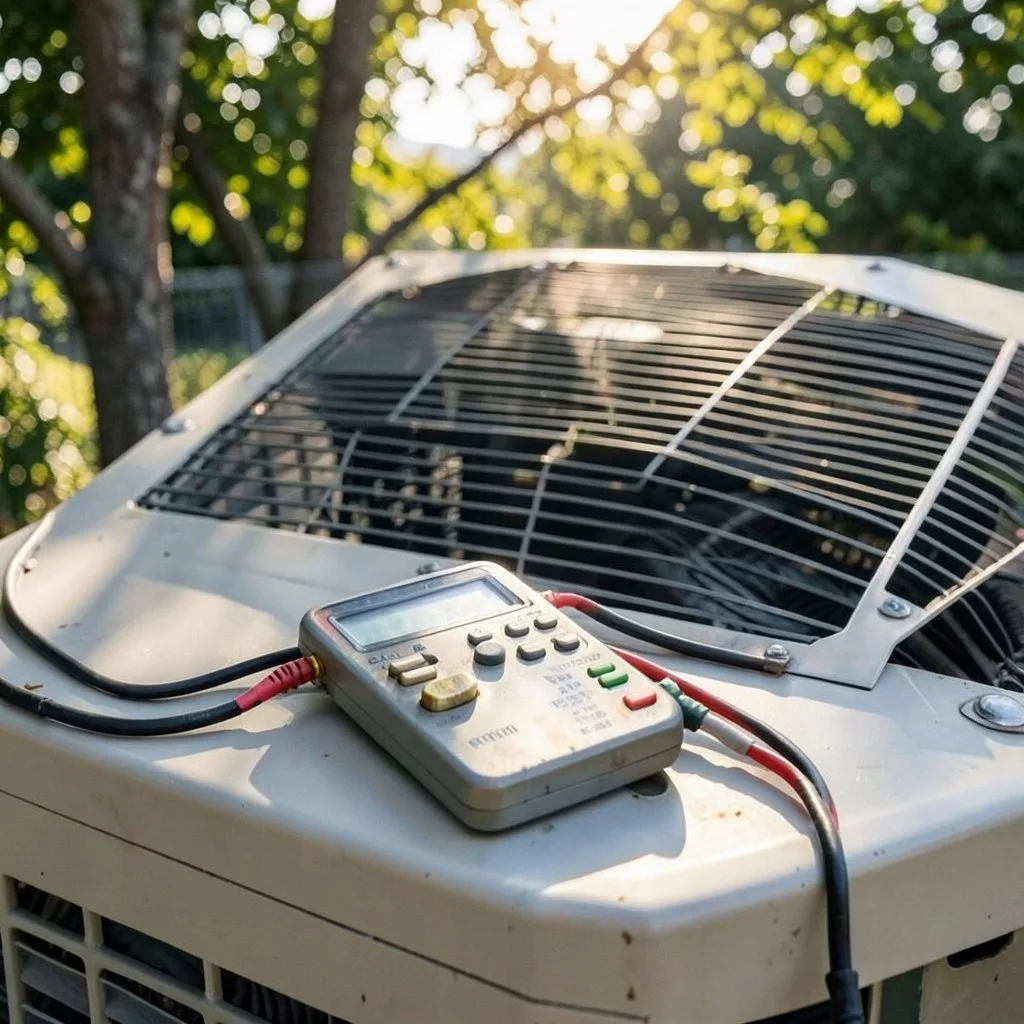
What does Cheyney do to heating and cooling equipment?
Two numbers frame every equipment decision near Cheyney: winter design lows around 12°F and summer peaks near 90°F. Stretch those across a year — 5,300 heating degree days, 1,050 cooling — and you get a market where the calls that cannot wait come in winter, and where undersized or neglected equipment gets found out on schedule.
A Cheyney service call starts with the house, not the unit: median local construction around 1968 means original duct runs, period insulation standards, and equipment rooms built for smaller machines. Gas furnaces paired with central AC dominate, with a stubborn legacy of oil furnaces and boilers in pre-1960 farmhouses and boroughs.
Every referral here starts from the zip code: Cheyney maps to independent contractors who chose this territory and hold Pennsylvania licensing for it. The after-hours line is staffed in this market, so weekend and holiday failures still reach a human with a truck.
In network terms, Cheyney runs as a single-zip market: both heating and cooling lines, and duct services registered across the local zip, with 24/7 dispatch live. Dispatch here shares a bench with nearby Eagleville and Edgemont, so a booked-out day locally still finds an available crew. For you that means HVAC maintenance routes to someone who priced this exact market — not a national estimate with your city name pasted in.
What are Cheyney homeowners describing — and what does it mean?
It has been more than a year since a professional looked at the system
Most manufacturers condition warranty coverage on documented annual maintenance.
Energy bills creeping up without rate changes
Dirty coils, marginal charge, and slipping blower performance tax every hour of runtime.
The system is 8+ years old and has never failed
Capacitors, ignitors, and contactors are wear parts — measurement catches them before failure does.
Heavy pollen, dust, or construction nearby this year
Coils and filters load faster than schedules assume.
You are heading into the first heat wave or cold snap
Systems fail under first-stress; pre-season checks front-run the failure queue.
Calling from Cheyney — what are the four steps?
-
Book before the season turns
Contractor calendars in Cheyney fill when the first freeze hits. Booking ahead of it is the whole trick.
-
Flat quoted rate
No coupon games: a stated price for a stated checklist from an independent local contractor.
-
Measured, not glanced at
Capacitor readings, temperature split, static pressure, combustion numbers where gas is involved — data on paper, not a thumbs-up.
-
Findings you can verify
You get a prioritized list with data behind it. Replace-now items come with readings, not adjectives.
How does hvac maintenance pricing work in Cheyney?
Pricing is set by the independent contractor — never by us — and the ground rules are the same on every call we route: the diagnostic fee is stated on the phone before dispatch, any after-hours premium is named up front, and you receive a written quote you can compare against any other bidder before authorizing work.
That structure isn't generosity — it's how the network stays healthy. A Pennsylvania contractor who surprises homeowners at the doorstep stops receiving routed calls, which means the pros who remain are the ones whose pricing conversations survive daylight. You benefit from that selection every time you dial.
| What to expect | When | Why it matters |
|---|---|---|
| Diagnostic fee disclosed | On the phone, before dispatch | No doorstep surprises — the visit price is known before a truck rolls |
| Findings shown, not described | During the visit | The failed part and its readings, in front of you |
| Written quote | Before any work begins | Yours to keep and shop — comparison is expected here |
| Scope itemized | In the quote | Model numbers and labor scope in writing |
Researching typical national figures first? Read HVAC Tune-Up Cost and What a Real One Includes — the itemized national breakdown, kept separate from this routing service.
The Cheyney seasonality problem, used to your advantage
Cheyney sits in a winter-peak market — the serious rush comes once a year, and pricing follows availability. Off-peak, diagnostic slots are same-day and premiums rare; at peak, after-hours rates apply more often simply because daytime calendars are full.
The practical move: treat the first mild-weather symptom — longer cycles, new noises, weaker output — as the booking trigger. Planned work quoted in the off-season gets sharper bids, because installers are filling calendars instead of rationing them.
One more calendar note specific to this market: with a median local home vintage around 1968, whole neighborhoods share equipment generations — and when a cohort ages out, replacement demand spikes together. Homeowners who quote a season ahead of their system's statistical retirement buy from a calm market; the neighbors who wait buy from a rushed one.
Tune-up season in Cheyney
A flat-rate visit with measurements — the cheapest insurance HVAC sells.
Call (877) 565-3062Why is the boring visit the profitable one?
Maintenance economics are unglamorous and decisive: wear parts announce their decline in measurements a full season before they strand anyone. A capacitor reading below its rating in spring is a planned swap on your calendar; the same part discovered dead during the first heat wave is an emergency visit at the year's worst pricing, with the queue to match.
The visit also protects the paperwork. Most manufacturers condition their parts warranties on documented professional maintenance — a denied compressor or heat-exchanger claim is a four-figure event, and the defense is a folder of routine invoices. Keep every one.
Which guides might save this Cheyney service call?
- Why Is My Heating Bill So High? Audit It in One Evening — Rates, weather, or the house — high heating bills have three causes and each leaves evidence. The one-evening audit that finds where the money goes.
- The Homeowner HVAC Maintenance Checklist (What You vs the Pro) — The maintenance split that keeps HVAC alive: what homeowners handle monthly and seasonally, what the annual professional visit must include, and why.
- How an HVAC System Works: Every Component, Explained in Order — HVAC stands for heating, ventilation, and air conditioning. How the furnace, AC, ducts, and thermostat actually work together — component by component.
Before the truck reaches your Cheyney address
A prepared homeowner shortens the diagnosis and sharpens the quote. Before your HVAC maintenance visit in Cheyney, pull together:
- Your equipment labels: a phone photo of the data plate on the unit gives the contractor model and age before arrival.
- Any past paperwork: prior repair invoices or tune-up sheets turn guesswork into history.
- The electrical panel location — and whether any breaker has tripped during the failure.
- The filter situation: when it was last changed and its size — the answer redirects a surprising number of diagnoses.
- The symptom timeline: when it started, whether it comes and goes, and what (if anything) changed in the house right before.
- Pets secured and gate codes shared: the two most common arrival delays, both free to prevent.
Which terms will your Cheyney contractor use on this job?
MERV Rating
MERV (Minimum Efficiency Reporting Value) rates an air filter’s ability to capture particles, from 1 to 16 in residential contexts. MERV 8 catches dust and pollen; MERV 11 adds finer dust and pet dander; MERV 13 captures smoke and many virus-carrying droplets. Higher ratings filter better but resist airflow more.
Static Pressure
Static pressure is the resistance the blower must overcome to push air through the duct system — HVAC’s blood pressure, measured in inches of water column. Most residential equipment is designed for about 0.5 inches total external static; real systems routinely measure far higher, meaning the blower is straining against undersized or restrictive ducts.
Condensate Line
The condensate line is the drain that carries away the water an air conditioner strips from household air — often five to twenty gallons a day in humid weather. Condensation forms on the cold evaporator coil, collects in a pan beneath it, and flows out through this small PVC line to a drain or outside.
Condensate pump
A condensate pump is a small reservoir-and-motor unit that collects the water your air conditioner or condensing furnace produces and pumps it up to a drain when gravity drainage is impossible — basements, closets, and attic installs. A float switch runs the pump as the reservoir fills; most include a second safety switch that shuts equipment down if the pump fails.
Every term links to its full glossary entry — the practical homeowner angle included. All 50 terms →
Vetting a HVAC maintenance contractor in Pennsylvania
Every contractor in this network is an independent Pennsylvania business responsible for its own licensing, insurance, and workmanship — and every legitimate pro expects to be verified. The checks below take five minutes and filter out nearly every bad outcome in residential HVAC:
- Check the labor warranty in writing — 1–2 years on repairs is standard; "we stand behind our work" is not a term.
- For quotes: model numbers, written scope, and permit handling in the document — a one-line quote is a red flag stated politely.
- Insist on the failed part being shown and the fix explained — techs who diagnosed correctly enjoy this part.
- Get the diagnostic fee and its terms (does it credit toward the repair?) stated before the visit is booked.
- Ask for the certificate of insurance — liability and workers’ comp. A pro emails it in minutes; hesitation is the answer.
None of this is adversarial — it's how good contractors prefer to work. A Pennsylvania pro who quotes fees on the phone, shows the failed part, and writes scope you can shop has nothing to fear from a checklist; the visit simply goes faster with an informed homeowner on the other side of it. The rare contractor who bristles at verification has answered the most important question before any work began.
HVAC Maintenance in Cheyney — common questions
Does skipping maintenance really void the warranty?
Most manufacturers require "regular maintenance by a qualified technician" for parts-warranty claims, and a denied compressor or heat-exchanger claim is a four-figure event. Keep the invoices. Whether enforcement is strict varies by brand and claim size — but for the cost of a yearly tune-up, it is cheap claim insurance on top of its operational value.
When is the smart time to schedule?
Cooling checks in spring, heating checks in fall — before first-stress weather, when contractor calendars are open and any parts discovered failing can be replaced at leisure pricing. Calling during the first 95° week or the first hard freeze puts you in the longest queue of the year at the year’s highest prices.
Is annual HVAC maintenance actually worth it, or is it a sales channel?
Both exist. The value is real: a capacitor read at 60% of rated capacity in April is a planned swap at standard rates instead of an emergency at July pricing, and documented maintenance keeps parts warranties valid. The sales-channel version exists too — endless "recommended replacements" every visit. The tell is measurements: a real tune-up hands you numbers; a sales visit hands you quotes.
What should a proper tune-up actually include?
Cooling side: refrigerant performance check, capacitor and contactor measurement, coil inspection/cleaning, condensate clear, temperature split, amp draws. Heating side: combustion analysis, heat exchanger inspection, ignition and safety-control testing, gas pressure, temperature rise. Both: filter, blower, static pressure, thermostat verification. Fifteen minutes without instruments is not a tune-up.
Is a no-heat call in Cheyney really an emergency?
Judge it by the numbers: local winters deliver long freezing spells with single-digit cold snaps with design lows around 12°F. Below freezing, an unheated house risks pipe damage within hours, which moves a dead furnace from inconvenience to emergency. In milder spells, booking the first daytime slot usually saves the after-hours premium.
What kind of HVAC equipment is common in Cheyney homes?
Gas furnaces paired with central AC dominate, with a stubborn legacy of oil furnaces and boilers in pre-1960 farmhouses and boroughs. The median local home dates to about 1968, so contractors here spend as much time on the distribution side — ducts, airflow, controls — as on the equipment itself.
Does weather here really change what HVAC maintenance costs?
Indirectly but reliably. With 5,300 heating and 1,050 cooling degree days a year, local failures cluster around first-stress weather — and when every truck in Cheyney is booked, after-hours premiums and multi-day queues do the pricing. The same job in shoulder season books same-day at standard rates.
Am I committed to anything by calling?
No. The call connects you with an independent local contractor who quotes their diagnostic fee up front. You can book, decline, or take the quote shopping — contractors in this network expect comparison and earn jobs on scope and price, not on capturing your phone number.
Prefer a callback from a Cheyney pro?
Same zip-matched routing as the phone line — an independent Pennsylvania contractor calls you, fee quoted before any visit.