
Heat Pump Services in Mercer Island, WA
One number covers heat pump service across the Mercer Island area. Your call routes to an independent Washington contractor who works this market — where long, damp heating seasons drive the failure season and heating here is engineered against design lows near 24°F. Diagnostic pricing is quoted before dispatch, and comparing bids is encouraged, not resented.
Climate figures rounded from NOAA 1991–2020 normals for Seattle–Tacoma, WA; design temperatures are regional planning values. See our methodology.
U.S. Census Bureau, American Community Survey 2023 5-year estimates (tables B25003, B25024, B25035), city-level.
Which local conditions drive which failures?
The Seattle–Tacoma, WA normals tell the story of what HVAC endures around Mercer Island: about 4,550 heating degree days against 200 cooling degree days annually, with design temperatures spanning 24°F to 85°F. Summers mean mild summers with heat-dome exceptions that overwhelm AC-less homes, winters mean long, damp heating seasons — and both show up in the local repair queue on schedule.
What hangs in local utility closets is as regional as the weather. Gas furnaces and electric baseboards are giving way to ducted and ductless heat pumps at the fastest rate in the country; insulation upgrades pair with nearly every conversion. Most of the surrounding housing dates to roughly 1980 — 46 years of duct settling and envelope drift that a good contractor reads as quickly as the equipment label.
What routing means in practice for Mercer Island: your address decides the contractor, not the other way around. The local zip code maps to independent Washington businesses that registered this territory as home turf, with the earliest daytime slots reserved for no-heat and no-cool calls.
Here is what the coverage map says about Mercer Island: a single-zip market, a single zip code, both heating and cooling lines, duct services, and insulation work live. Dispatch here shares a bench with nearby Sultan and Duvall, so a booked-out day locally still finds an available crew. Those are routing facts, not marketing — they decide who actually answers when you call about heat pump service.
What are Mercer Island homeowners describing — and what does it mean?
Considering replacing both furnace and AC at once
One heat pump can replace both — this is exactly the moment the heat-pump math is strongest.
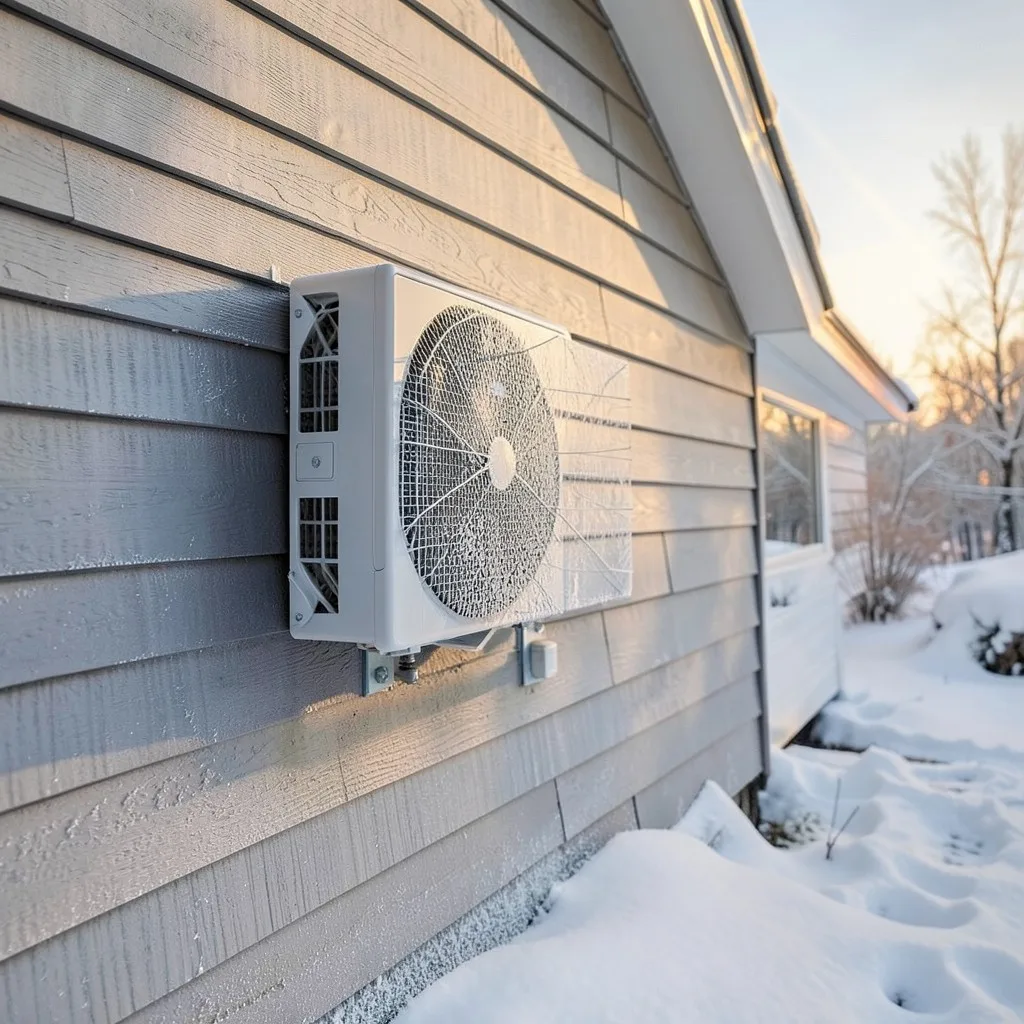
Existing heat pump ices over and stays iced
Normal defrost handles light frost; an ice ball means defrost controls, sensors, or charge need service.
Electric bills spike in winter
Auxiliary resistance heat running more than it should — controls, balance point, or capacity problem.
All-electric home heated by baseboards or an electric furnace
A heat pump typically delivers the same heat for a half to a third of the electricity.
Chasing utility rebates or the federal credit
Heat pumps carry the largest residential HVAC incentives available — the biggest federal credit in the category plus local stacking.
Calling from Mercer Island — what are the four steps?
-
Context before quotes
Age of the current system, rooms that never worked, fuel type, timeline — replacement in Mercer Island is a design job, and context shapes quote quality.
-
Matched to an installer
You are routed to an independent Washington installer who fits equipment to this climate — about 4,550 heating and 200 cooling degree days a year — not to a national average.
-
Load calculation before price
Sizing comes from your house, not your driveway. Expect the load calculation, and expect model numbers on the paperwork.
-
Compare bids like a buyer
Take the quote and set it against any competitor. The job goes to whoever earns it on scope — that is how this is supposed to work.
How does heat pump services pricing work in Mercer Island?
Pricing is set by the independent contractor — never by us — and the ground rules are the same on every call we route: the diagnostic fee is stated on the phone before dispatch, any after-hours premium is named up front, and you receive a written quote you can compare against any other bidder before authorizing work.
That structure isn't generosity — it's how the network stays healthy. A Washington contractor who surprises homeowners at the doorstep stops receiving routed calls, which means the pros who remain are the ones whose pricing conversations survive daylight. You benefit from that selection every time you dial.
| What to expect | When | Why it matters |
|---|---|---|
| Diagnostic fee disclosed | On the phone, before dispatch | No doorstep surprises — the visit price is known before a truck rolls |
| Findings shown, not described | During the visit | The failed part and its readings, in front of you |
| Written quote | Before any work begins | Yours to keep and shop — comparison is expected here |
| Scope itemized | In the quote | Model numbers and labor scope in writing |
Researching typical national figures first? Read Heat Pump Installation Cost, Before and After Incentives — the itemized national breakdown, kept separate from this routing service.
The Mercer Island seasonality problem, used to your advantage
Mercer Island sits in a winter-peak market — the serious rush comes once a year, and pricing follows availability. Off-peak, diagnostic slots are same-day and premiums rare; at peak, after-hours rates apply more often simply because daytime calendars are full.
Quotes gathered off-peak also age well: scope written in September can be executed on your schedule, not the weather's. Either way, the calendar is a price lever most homeowners never think to pull.
One more calendar note specific to this market: with a median local home vintage around 1980, whole neighborhoods share equipment generations — and when a cohort ages out, replacement demand spikes together. Homeowners who quote a season ahead of their system's statistical retirement buy from a calm market; the neighbors who wait buy from a rushed one.
Pricing a new system for Mercer Island?
A proper local bid costs one phone call and obligates you to nothing.
Call (877) 565-3062What separates a good install from an expensive one?
The equipment brand matters less than the installation decisions around it: a load calculation instead of a driveway guess, ducts measured for the airflow the new system actually needs, refrigerant charge and airflow verified with instruments at commissioning, and the permit pulled rather than skipped. Two crews installing the identical unit can deliver measurably different efficiency for its entire fifteen-year life.
Read competing bids by scope, not bottom line. Model numbers for every component, line-set and drain handling, electrical work, permit responsibility, commissioning steps, and the labor warranty — in writing. The cheapest bid is usually cheapest because something on that list is missing, and the missing item is rarely missing by accident.
Which guides might save this Mercer Island service call?
- Heat Pump Not Heating? Normal vs Broken, Sorted — Cool-feeling air, frost, steam clouds — much heat pump “failure” is normal operation. What is actually broken vs physics, and when to call.
Before the truck reaches your Mercer Island address
A prepared homeowner shortens the diagnosis and sharpens the quote. Before your heat pump service visit in Mercer Island, pull together:
- The filter situation: when it was last changed and its size — the answer redirects a surprising number of diagnoses.
- Any past paperwork: prior repair invoices or tune-up sheets turn guesswork into history.
- Clear access: a path to the equipment, the attic hatch, or the crawlspace door saves billable minutes on arrival.
- The symptom timeline: when it started, whether it comes and goes, and what (if anything) changed in the house right before.
- The electrical panel location — and whether any breaker has tripped during the failure.
- Your equipment labels: a phone photo of the data plate on the unit gives the contractor model and age before arrival.
Which terms will your Mercer Island contractor use on this job?
Heat Pump
A heat pump is a refrigerant-based system that moves heat rather than generating it: out of the house in summer (exactly like an air conditioner) and into the house in winter, by extracting heat from outdoor air even when that air is cold. Because moving heat takes far less energy than creating it, a heat pump typically delivers two to four units of heat per unit of electricity consumed.
HSPF2
HSPF2 (Heating Seasonal Performance Factor 2) rates a heat pump’s heating efficiency: seasonal heat output in BTUs divided by watt-hours of electricity consumed, under the test conditions in force since 2023. The federal minimum is 7.5 HSPF2; efficient units score 8.5 or higher. Higher numbers mean more heat per kilowatt-hour, which directly sets winter operating cost.
SEER2
SEER2 (Seasonal Energy Efficiency Ratio 2) is the federal efficiency metric for air conditioners and heat pumps in cooling mode, in force since 2023. It measures seasonal cooling output divided by electricity consumed, tested under more realistic external duct pressure than the old SEER standard — which is why SEER2 numbers run about 4.5% lower than equivalent SEER ratings.
Auxiliary heat
Auxiliary heat is a heat pump’s backup heat source — usually electric resistance strips inside the air handler — that switches on when the heat pump alone cannot hold temperature: during deep cold, defrost cycles, or big thermostat setpoint jumps. It heats reliably but costs two to three times more per unit of warmth than the heat pump itself.
Every term links to its full glossary entry — the practical homeowner angle included. All 50 terms →
Before you hire in Mercer Island: the five-minute check
Every contractor in this network is an independent Washington business responsible for its own licensing, insurance, and workmanship — and every legitimate pro expects to be verified. The checks below take five minutes and filter out nearly every bad outcome in residential HVAC:
- Ask for the certificate of insurance — liability and workers’ comp. A pro emails it in minutes; hesitation is the answer.
- Check the labor warranty in writing — 1–2 years on repairs is standard; "we stand behind our work" is not a term.
- Get the diagnostic fee and its terms (does it credit toward the repair?) stated before the visit is booked.
- Compare at least one competing bid on any major repair or replacement. Contractors who earn jobs on scope expect this; the ones who resent it are telling you why.
- Insist on the failed part being shown and the fix explained — techs who diagnosed correctly enjoy this part.
None of this is adversarial — it's how good contractors prefer to work. A Washington pro who quotes fees on the phone, shows the failed part, and writes scope you can shop has nothing to fear from a checklist; the visit simply goes faster with an informed homeowner on the other side of it. The rare contractor who bristles at verification has answered the most important question before any work began.
Mercer Island heat pump service: the short answers
Why is there ice on my heat pump — and when is it a problem?
Light frost on the outdoor coil in cold, damp weather is normal, and the unit periodically reverses into defrost to clear it (steam and a whooshing sound — also normal). A solid ice shell, ice that persists through defrost cycles, or fan blades striking ice are service calls: typically defrost controls, a bad sensor, low charge, or blocked drainage under the unit.
What incentives apply to heat pumps right now?
The federal 25C credit: 30% of installed cost up to the category’s largest annual cap, for qualifying models. Many states and utilities stack rebates from a few hundred dollars to several thousand on top, especially where gas-to-electric conversion is policy. Check dsireusa.org and your utility, and get the model’s qualification status in writing from the contractor before signing.
What does a heat pump cost to run versus a gas furnace?
It hinges on local rates. A heat pump moving 3 units of heat per unit of electricity competes with gas whenever electricity costs less than about 3–4× gas per unit of energy. At typical national averages the heat pump wins in mild and moderate climates and roughly ties in cold ones — where dual-fuel setups capture the best of both. Your utility’s actual rates decide it, not national averages.
Do heat pumps actually work in cold climates?
Modern cold-climate models hold most of their rated capacity at 5°F and keep producing useful heat below -10°F — the Maine and Minnesota markets run on them. The engineering requirements are real, though: proper sizing to the heating load (not the cooling load), a correctly set balance point, and adequate backup for the coldest tail of the year. The technology stopped being the limitation a decade ago; installation quality is the limitation now.
Is a no-heat call in Mercer Island really an emergency?
Judge it by the numbers: local winters deliver long, damp heating seasons with design lows around 24°F. Below freezing, an unheated house risks pipe damage within hours, which moves a dead furnace from inconvenience to emergency. In milder spells, booking the first daytime slot usually saves the after-hours premium.
What kind of HVAC equipment is common in Mercer Island homes?
Gas furnaces and electric baseboards are giving way to ducted and ductless heat pumps at the fastest rate in the country; insulation upgrades pair with nearly every conversion. The median local home dates to about 1980, so contractors here spend as much time on the distribution side — ducts, airflow, controls — as on the equipment itself.
Does weather here really change what heat pump service costs?
Indirectly but reliably. With 4,550 heating and 200 cooling degree days a year, local failures cluster around first-stress weather — and when every truck in Mercer Island is booked, after-hours premiums and multi-day queues do the pricing. The same job in shoulder season books same-day at standard rates.
Who actually shows up when I call?
An independent, third-party contractor whose registered service area covers your WA zip code — not an out-of-market call center crew. We are a referral service: the contractor sets pricing, runs the visit, and answers for the work, and you owe nothing for the connection itself.
Prefer a callback from a Mercer Island pro?
Same zip-matched routing as the phone line — an independent Washington contractor calls you, fee quoted before any visit.