
Heat Pump Services: one call, routed to a local contractor
Whether it is a heat pump that ices over, a planned conversion from gas, or a first bid on a cold-climate system, one call routes you to an independent local contractor registered for your ZIP code. Ask that quotes state heating capacity at your design temperature and which state or utility incentives the model qualifies for — two facts a weak heat-pump proposal leaves out.
What does heat pump service involve?
A heat pump heats and cools with the same equipment, so both its heating capacity at your winter design temperature and its cooling rating matter. ENERGY STAR’s cold-climate designation requires third-party verified low-temperature performance (tested at 5°F), and ENERGY STAR’s guidance is that properly sized equipment is essential to performance and comfort; ask for the heating output at your design temperature, not only a nameplate tonnage.
Refrigerant work on a heat pump is Section 608 work (EPA). Icing that does not clear, or backup heat running constantly, are the symptoms to describe when you call.
Editorial guidance with the public sources listed on this page; HVAC Responder Editorial Team · Reviewed 2026-11-01. Pricing figures live on the phone-free cost guides.
When is heat pump service an emergency — and what comes before any call?
- Smoke or flames from the equipment: get everyone out, go to your outside meeting place and stay there, and call the fire department from there (USFA). A burning or electrical smell without smoke: say so when you call and ask for the earliest visit.
- No heat with freezing temperatures outside is urgent for the house as well as the people in it; say so plainly when you call and ask for the earliest visit.
- No cooling in dangerous heat with infants or young children, anyone 65 or older, or anyone with a chronic health condition at home is a health matter before it is a repair: stay cool — find air conditioning, or dial 2-1-1 to locate a cooling center — know the symptoms of overheating and seek medical care when they appear, then arrange the repair (CDC).
- A suspected refrigerant leak: say so when you call. Refrigerant handling is certified work — federal rules require technicians who maintain, service, repair or dispose of equipment that could release refrigerant to be certified under Section 608 (EPA) — so it is a question for the technician, not a do-it-yourself job.
What the symptom usually means
Considering replacing both furnace and AC at once
One heat pump can replace both — this is exactly the moment the heat-pump math is strongest.
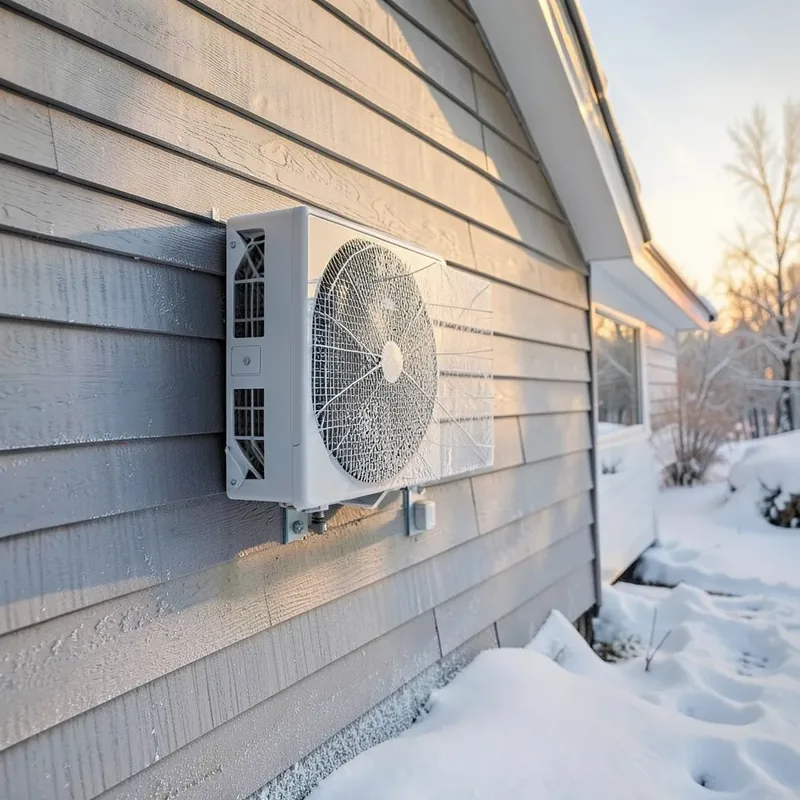
Existing heat pump ices over and stays iced
Normal defrost handles light frost; an ice ball means defrost controls, sensors, or charge need service.
Electric bills spike in winter
Auxiliary resistance heat running more than it should — controls, balance point, or capacity problem.
All-electric home heated by baseboards or an electric furnace
Resistance heat delivers one unit of heat per unit of electricity; a heat pump moves heat and delivers more — its HSPF2 rating on the AHRI listing says how much.
Chasing utility or state rebates
Heat pumps are the equipment most often targeted by state and utility programs; the federal §25C credit ended for property placed in service after December 31, 2025, so check dsireusa.org for what applies at your address.
How the call works
-
Describe the project, not just the equipment
Age of the current system, rooms that never worked right, fuel type, timeline. Replacement is a design job, and context shapes the quote quality.
-
Routed to an installer registered for your ZIP
Your call routes to an independent local company that registered your territory. Ask for its license number and certificate of insurance before the visit — it is a normal question to ask.
-
Load calculation before price
A legitimate replacement quote follows a Manual J load calculation and a duct check. Ask for model numbers, scope, permits, and commissioning steps in writing.
-
Compare bids like a buyer
No obligation and no exclusivity — take the quote, set it against any competitor, and award the job to whoever earns it on scope, not just price.
This is a referral line. The contractor who answers is an independent business that registered its routing category for your ZIP code in the data dated July 12, 2026; it sets its own fees, schedule and availability, and may pay this site a referral fee if it accepts the call.
How heat pump services pricing works here
Every contractor in this network sets its own pricing — this site never marks it up, never quotes it, and takes no part in the visit. What this page can do is tell you what to ask, on the phone, before you agree to a visit:
| Ask | When | Why it matters |
|---|---|---|
| What is the diagnostic fee, and does it credit toward the repair? | On the phone, before booking | So the visit price is known before a truck rolls |
| Will you show me the failed part and its readings? | During the visit | A diagnosis you can see beats one you are told |
| Can I have the quote in writing before work begins? | Before authorizing | Yours to keep and shop — comparison is normal |
| Are model numbers, scope and permit responsibility in the quote? | In the quote | A one-line quote hides what a full one shows |
Want national planning figures first? The editorial cost guides itemize each job line by line — research content, kept separate from this routing service.
When to book this work
Planned work rewards planning. The weather sets when systems are under full load — the first heat wave and the first hard freeze — and gathering quotes for heat pump service before that season means the decision is made on written numbers rather than during a failure. Whether any contractor's lead time or price changes with the season is the contractor's own; ask each bidder.
The other timing lever is your own equipment: ENERGY STAR's guidance is to have equipment more than 10 years old, or not keeping the house comfortable, evaluated by a professional (read 2026-09-10). Quotes gathered before a failure can be executed on your schedule; waiting for the failure means deciding under pressure.
What separates a good install from an expensive one?
The equipment brand matters less than the installation decisions around it: a load calculation instead of a driveway guess, ducts measured for the airflow the new system actually needs, refrigerant charge and airflow verified with instruments at commissioning, and the permit pulled rather than skipped. Two crews installing the identical unit can deliver measurably different efficiency for its entire service life.
Read competing bids by scope, not bottom line. Model numbers for every component, line-set and drain handling, electrical work, permit responsibility, commissioning steps, and the labor warranty — in writing. A low bid is often low because something on that list is missing, and the missing item is rarely missing by accident.
How do you compare written proposals for heat pump service?
Ask every bidder for the same things, in writing, so the proposals can be laid side by side:
- Heating capacity at your winter design temperature and the balance point, stated on the proposal.
- Matched model numbers with the AHRI certificate; the backup heat source and how it is controlled.
- For repairs: the refrigerant finding and the technician’s EPA 608 certification.
- The company’s legal name, license number (where the state licenses this work) and insurance certificate on the document — then check the number in the state lookup.
- Model numbers for every major component, with the certified ratings you can look up yourself in the AHRI Certification Directory (Directory of Certified Product Performance).
- The scope in writing: what is removed, what is installed or repaired, what is reused, and what is excluded.
- Who pulls permits and schedules inspections, and whether the price includes them.
- The labor warranty term in writing, and who registers the manufacturer parts warranty.
- Payment terms — a deposit that is a modest share of the price, the balance on completion, and never full payment up front.
Sources for this guide: ENERGY STAR — Air-Source Heat Pumps (read 2026-09-07); AHRI Certification Directory — Directory of Certified Product Performance (read 2026-09-07); US EPA — Section 608 Technician Certification Requirements (read 2026-09-07); Air Conditioning Contractors of America — Technical Manuals (Manual J, S, D) (read 2026-09-07); U.S. Fire Administration — Home Fire Escape Plans (read 2026-09-07); CDC — About Heat and Your Health (read 2026-09-07).
Is heat pump service routed for your ZIP code?
Checks whether your ZIP code appears for heating in the routing data dated July 12, 2026. It does not check availability, count contractors, or state a response time.
Source: routing data on record as of July 12, 2026. No prices, contractor names or counts are published.
Prepare the heat pump service call: turn your symptom into questions
Nothing here diagnoses your system or prices a repair. It turns what you know — age, symptom, refrigerant if you know it, whether anyone has looked at it — into the questions worth asking the contractor who answers.
Before you call about heat pump services: what to have ready and what to ask
The result is a list of questions for the contractor, not a diagnosis and not a price.
R-22 facts: Phaseout of Class II Ozone-Depleting Substances | US EPA, read 2026-09-06. Everything else on this list is a question, not a claim.
Terms your contractor will use on this job
Heat Pump
A heat pump is a refrigerant-based system that moves heat rather than generating it: out of the house in summer (exactly like an air conditioner) and into the house in winter, by extracting heat from outdoor air even when that air is cold. Because moving heat takes far less energy than creating it, a heat pump typically delivers two to four units of heat per unit of electricity consumed.
Balance Point
A heat pump’s balance point is the outdoor temperature at which its heating output exactly equals the house’s heat loss. Above it, the heat pump carries the load alone; below it, backup heat — electric strips or a furnace — must make up the difference. Typical balance points fall between 25 and 40°F depending on equipment capacity and the house envelope.
HSPF2
HSPF2 (Heating Seasonal Performance Factor 2) rates a heat pump’s heating efficiency: seasonal heat output in BTUs divided by watt-hours of electricity consumed, under the test conditions in force since 2023. The federal minimum is 7.5 HSPF2; efficient units score 8.5 or higher. Higher numbers mean more heat per kilowatt-hour, which directly sets winter operating cost.
SEER2
SEER2 (Seasonal Energy Efficiency Ratio 2) is the federal efficiency metric for air conditioners and heat pumps in cooling mode, in force since 2023. It measures seasonal cooling output divided by electricity consumed, tested under higher external static pressure (the M1 test procedure) than the old SEER standard, which is closer to a real duct system — so a SEER2 number is not directly comparable with an older SEER rating.
Auxiliary heat
Auxiliary heat is a heat pump’s backup heat source — usually electric resistance strips inside the air handler — that switches on when the heat pump alone cannot hold temperature: during deep cold, defrost cycles, or big thermostat setpoint jumps. It heats reliably but costs two to three times more per unit of warmth than the heat pump itself.
Each links to its full glossary entry. All 50 terms →
What to ask any heat pump service contractor — from this line or anywhere
Which license, and where can I check it?
Every contractor this line routes to is an independent business responsible for its own licensing. Ask for the license number on the estimate; each city page on this site carries the state's own wording and lookup where one has been verified.
What is the fee, and does it credit?
Ask the diagnostic cost, whether it credits toward a repair, and any after-hours premium — on the phone, before a truck rolls. This site sets no prices and cannot promise what a contractor will say.
Can I see the diagnosis?
Ask for the failed part and its readings, and on aging equipment ask for the repair-versus-replace conversation with the numbers attached.
Can I have that in writing?
Ask for the quote in writing before work begins. Comparing it against any competitor is your right.
Federal rule, every state: under Clean Air Act Section 608, “technicians who maintain, service, repair, or dispose of equipment that could release ozone depleting refrigerants into the atmosphere must be certified.” Ask to see the technician’s EPA 608 card when refrigerant is handled. Source: Stationary Refrigeration and Air Conditioning | US EPA, read 2026-09-06.
Collecting replacement bids?
Add a quote from an independent local installer — ask for the load calculation, model numbers, and scope in writing.
Call (877) 565-3062Heat Pump Services questions, answered straight
Do heat pumps actually work in cold climates?
Cold-climate models are tested for it: ENERGY STAR certification for air-source heat pumps requires third-party verified performance at low temperatures, tested down to 5°F (ENERGY STAR, read 2026-09-07), and manufacturers publish capacity tables by outdoor temperature. The engineering requirements are real: sizing to the heating load (not the cooling load), a correctly set balance point, and adequate backup for the coldest tail of the year. Ask for the heating output at your winter design temperature, in writing.
Why is there ice on my heat pump — and when is it a problem?
Light frost on the outdoor coil in cold, damp weather is normal, and the unit periodically reverses into defrost to clear it (steam and a whooshing sound — also normal). A solid ice shell, ice that persists through defrost cycles, or fan blades striking ice are service calls: typically defrost controls, a bad sensor, low charge, or blocked drainage under the unit.
What does a heat pump cost to run versus a gas furnace?
It hinges on your rates and the model’s rating. A heat pump’s HSPF2 states how much heat it delivers per unit of electricity; divide your electricity price by that ratio to get a cost per unit of heat, and compare it with your gas price per unit of heat after the furnace’s AFUE. Your utility’s actual rates decide it, not national averages; in cold climates the dual-fuel configuration is the one to price alongside.
Can a heat pump reuse my existing ductwork?
Usually, with a caveat: heat pumps move more air at lower temperatures than furnaces, so ducts sized for a furnace sometimes run high static pressure with a heat pump — noise, weak rooms, and efficiency loss. A competent installer measures static pressure and either confirms the ducts or scopes the fixes. Skipping that measurement is how "my new heat pump is loud and the back room is cold" happens.
What incentives apply to heat pumps right now?
The federal §25C credit applied only to property placed in service through December 31, 2025 (IRS, read 2026-09-06) and is not available for 2026 work; check state and utility programs at dsireusa.org instead. Many states and utilities offer rebates from a few hundred dollars to several thousand, especially where gas-to-electric conversion is policy. Check dsireusa.org and your utility, and get the model’s qualification status in writing from the contractor before signing.
Prefer to talk it through? One call does it
Same ZIP-matched routing: your address picks the independent contractor. Ask its diagnostic fee on the call before agreeing to a visit; this site sets no prices.
Call (877) 565-3062No obligation · compare any quote you receive · how this works
Featured heat pump services coverage
Contractor coverage is ZIP-code based. As of the routing data dated July 12, 2026, 2,892 named markets had this category on record; these are among them:
Both paths end at the same questions
Some homeowners want the full picture before dialing — for them, the itemized cost guides, the troubleshooting library, and the glossary exist so a heat pump service conversation can be had fluently. The number at the top of this page routes to an independent contractor whose fee and schedule you should ask about before booking. Neither path is wrong.
What we'd gently insist on either way: describe the symptom precisely (this page's symptom section gives you the vocabulary), ask the contractor to show you the diagnosis before authorizing work, and keep the written quote — comparison is your right.
Equipment, repair and symptom guides
Choose a model-specific brand, component or symptom guide to prepare for an independent contractor visit.
- Heat Pump Fan Not Spinning: Defrost or Fault?
- Heat Pump Frozen: Frost Versus Persistent Ice
- Heat Pump Leaking Water: Indoors or Outdoors?
- Heat Pump Making Noise: New Sounds Need Context
- Heat Pump Not Cooling: Mode and Airflow Checks
- Heat Pump Not Heating: Check the Heat Request
- Heat Pump Not Turning On: What to Record
- Heat Pump Wont Stop Running: Heat or Fan?
- Geothermal Heat Pump Repair: Loop-Specific Service
- Heat Pump Capacitor Replacement: Confirm the Design
Brand repair guides
- Comfortmaker Heat Pump Repair: C5H8T checks
- Comfortmaker heat pump repair: C5H8T checks
- Daikin Heat Pump Repair: Atmosphera Heating and Defrost
- GREE Heat Pump Repair: FLEXX Defrost and Drive
- Heil Heat Pump Repair: N4H5S checks
- Heil heat pump repair: N4H5S checks
- Luxaire Heat Pump Repair: HMH7 Mode and Sensor Records
- Tempstar Heat Pump Repair: T4H7T checks
- Tempstar heat pump repair: T4H7T checks
- Trane Heat Pump Repair: 4TWR4 Defrost Records
- Waterfurnace Heat Pump Repair: Loop and Status