
Heat Pump Services in Little Elm, TX
Call once and Little Elm routing does the rest: a ZIP-matched referral to an independent Texas contractor for heat pump service. In a market of ice storms and occasional hard cold snaps, where heating is engineered against design lows near 22°F, that first accurate visit is most of the battle — so ask the diagnostic fee, whether it credits toward the repair, and the earliest visit before you book.
Climate figures are regional: rounded from NOAA 1991–2020 normals for Dallas–Fort Worth, TX, shared by every market in that region; design temperatures are regional planning values. Coverage counts come from the routing data dated July 12, 2026. See our methodology.
U.S. Census Bureau, American Community Survey 2023 5-year estimates (tables B25003, B25024, B25035), city-level. These four figures are specific to Little Elm.
Electric utility on record for Little Elm ZIP codes: Denton County Elec Coop, Inc (cooperative, 2023 average residential rate 12.8¢/kWh). U.S. Department of Energy / OpenEI, “U.S. Electric Utility Companies and Rates: Look-up by Zipcode (2023)” (EIA-861 data), read 2026-09-12; matched to the ZIP codes on record for this city in the routing data. A rate is the utility's 2023 residential average, not your tariff.
Incentive programs on record at DSIRE for Little Elm (read 2026-09-12): Denton Municipal Electric - Residential GreenSense Energy Efficiency Rebate Program. Programs whose owner is the electric utility on record for a Little Elm ZIP code, or Little Elm itself. Names and links only; amounts and eligibility are on DSIRE’s program page (Texas listing). Ask the contractor which program it will file for and the date of the terms it quotes.
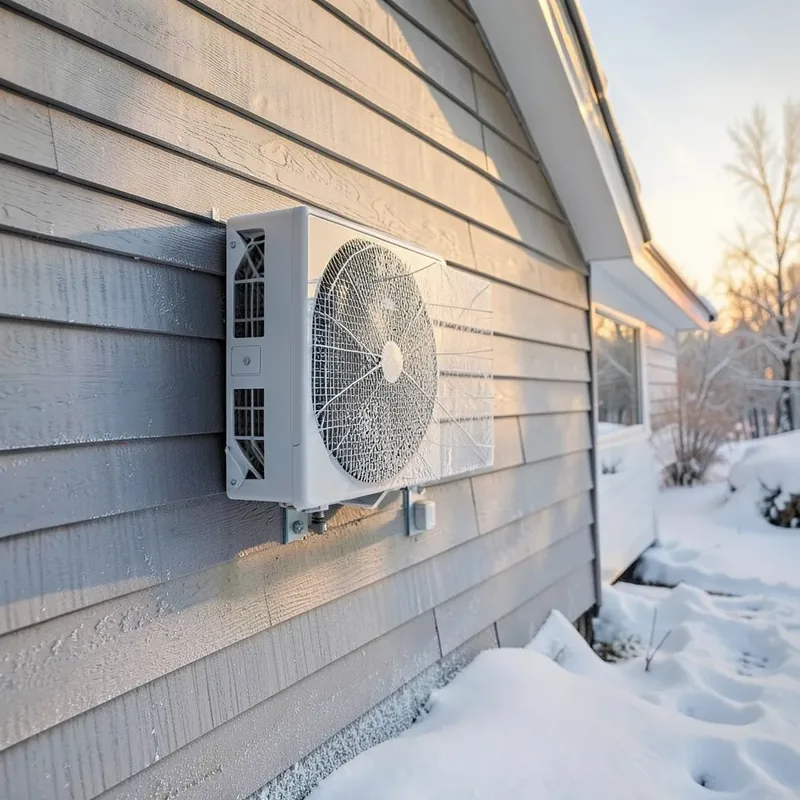
What does Little Elm do to heating and cooling equipment?
Little Elm weather works equipment from both ends: roughly 2,200 heating degree days and 2,850 cooling degree days a year at the Dallas–Fort Worth, TX reference station. Summers bring triple-digit heat stretches; winters answer with ice storms and occasional hard cold snaps. Systems that survive here are the ones sized to those numbers rather than to a rule of thumb.
A Little Elm service call should start with the house, not the unit. Gas furnace and AC splits and heat pumps are both common; air handlers and ductwork are often attic-mounted. Ask the contractor what it found in yours; this page holds no per-house data.
What routing means in practice for Little Elm: your address decides the contractor, not the other way around. The local ZIP code maps to independent Texas businesses that registered this territory in the routing data. Nothing here promises a response time; the contractor states its earliest visit on the call.
The same export lists Lake Dallas and Frisco as covered markets along this corridor. Little Elm itself is a single-zip market — both heating and cooling lines, duct services, and insulation work on record across one ZIP code. These are routing facts from a dated export; they say nothing about how many contractors answer or how quickly one arrives.
Coverage statements on this page reflect the routing data on file as of July 12, 2026; the contractor confirms availability on the call.
Is heat pump service on record for your Little Elm ZIP code?
Checks whether your ZIP code appears for heating in the routing data dated July 12, 2026. It does not check availability, count contractors, or state a response time.
Source: routing data on record as of July 12, 2026. No prices, contractor names or counts are published.
Symptoms that lead to this call in Little Elm, and what they usually mean
Considering replacing both furnace and AC at once
One heat pump can replace both — this is exactly the moment the heat-pump math is strongest.
Existing heat pump ices over and stays iced
Normal defrost handles light frost; an ice ball means defrost controls, sensors, or charge need service.
Electric bills spike in winter
Auxiliary resistance heat running more than it should — controls, balance point, or capacity problem.
All-electric home heated by baseboards or an electric furnace
Resistance heat delivers one unit of heat per unit of electricity; a heat pump moves heat and delivers more — its HSPF2 rating on the AHRI listing says how much.
Chasing utility or state rebates
Heat pumps are the equipment most often targeted by state and utility programs; the federal §25C credit ended for property placed in service after December 31, 2025, so check dsireusa.org for what applies at your address.
Calling from Little Elm — what are the four steps?
-
Context before quotes
Tell the contractor what you have and what never worked right. A Little Elm replacement bid built on context beats one built on tonnage alone.
-
Matched to an installer
The contractor who calls back registered Little Elm as territory. Ask for its license number and certificate of insurance before the visit; it is a normal question to ask.
-
Numbers precede dollars
A legitimate quote follows a load calculation (Manual J) and, for ducted systems, a duct check — ask for model numbers, scope, permits, and commissioning steps in writing.
-
Compare bids like a buyer
You are never locked in. Collect bids, compare scope line by line, and award the work on your schedule.
How does heat pump services pricing work in Little Elm?
Pricing is set by the independent contractor — never by this site, which takes no part in the quote and adds nothing to your bill. The contractor decides its diagnostic fee, whether that fee credits toward a repair, any after-hours premium, and its parts and labor rates. What this page can do is tell you what to ask before you agree to a visit.
Ask the questions below on the phone. A contractor that answers them plainly is easy to compare against any other bidder; one that cannot say what the visit costs until it arrives has told you something useful too. You are not obliged to book, and comparing bids is your right.
| Ask | When | Why it matters |
|---|---|---|
| What is the diagnostic fee, and does it credit toward the repair? | On the phone, before booking | So the visit price is known before a truck rolls |
| Will you show me the failed part and its readings? | During the visit | A diagnosis you can see beats one you are told |
| Can I have the quote in writing before work begins? | Before authorizing | Yours to keep and shop — comparison is normal |
| Are model numbers, scope and permit responsibility in the quote? | In the quote | A one-line quote hides what a full one shows |
Researching typical national figures first? Read Heat Pump Installation Cost, Before and After Incentives — the itemized national breakdown, kept separate from this routing service.
Timing a heat pump service call in Little Elm
Little Elm sits in a summer-peak region, with one main peak a year. When you call, ask the contractor for its current lead time and whether its rates differ by season or after hours; the answer is the contractor's own.
The practical move: treat the first mild-weather symptom — longer cycles, new noises, weaker output — as the booking trigger, so quotes can be gathered before the season rather than during it. Ask each contractor what it can offer and when.
Regional figures say nothing about your own equipment near Little Elm. Its data plate and a pre-season inspection do.
One more bid changes the math
Tell each bidder you are comparing on scope, and compare on scope.
Call (877) 565-3062What separates a good install from an expensive one?
The equipment brand matters less than the installation decisions around it: a load calculation instead of a driveway guess, ducts measured for the airflow the new system actually needs, refrigerant charge and airflow verified with instruments at commissioning, and the permit pulled rather than skipped. Two crews installing the identical unit can deliver measurably different efficiency for its entire service life.
Read competing bids by scope, not bottom line. Model numbers for every component, line-set and drain handling, electrical work, permit responsibility, commissioning steps, and the labor warranty — in writing. A low bid is often low because something on that list is missing, and the missing item is rarely missing by accident.
The shared heat pump services guide covers what the service involves, when it is an emergency, how to compare written proposals, and the call-preparation tool — kept in one place rather than repeated on every city page.
Which guides might save this Little Elm service call?
- Heat Pump Not Heating? Normal vs Broken, Sorted — Cool-feeling air, frost, steam clouds — much heat pump “failure” is normal operation. What is actually broken vs physics, and when to call.
Before the contractor reaches your Little Elm address
Everything below is something to have ready or to note down — not a diagnosis. Before your heat pump service visit in Little Elm:
- The age and fuel type of the current system (a photo of each data plate), and which rooms never worked right.
- Where the ducts run and whether they are accessible, and where the outdoor unit and the indoor equipment sit.
- Any prior quotes, permits or inspection records for the existing system.
- Your winter and summer comfort complaints, written down, so the load calculation can be checked against them.
- Clear access to the equipment, the attic hatch and the electrical panel.
Which terms will your Little Elm contractor use on this job?
Heat Pump
A heat pump is a refrigerant-based system that moves heat rather than generating it: out of the house in summer (exactly like an air conditioner) and into the house in winter, by extracting heat from outdoor air even when that air is cold. Because moving heat takes far less energy than creating it, a heat pump typically delivers two to four units of heat per unit of electricity consumed.
Balance Point
A heat pump’s balance point is the outdoor temperature at which its heating output exactly equals the house’s heat loss. Above it, the heat pump carries the load alone; below it, backup heat — electric strips or a furnace — must make up the difference. Typical balance points fall between 25 and 40°F depending on equipment capacity and the house envelope.
SEER2
SEER2 (Seasonal Energy Efficiency Ratio 2) is the federal efficiency metric for air conditioners and heat pumps in cooling mode, in force since 2023. It measures seasonal cooling output divided by electricity consumed, tested under higher external static pressure (the M1 test procedure) than the old SEER standard, which is closer to a real duct system — so a SEER2 number is not directly comparable with an older SEER rating.
Auxiliary heat
Auxiliary heat is a heat pump’s backup heat source — usually electric resistance strips inside the air handler — that switches on when the heat pump alone cannot hold temperature: during deep cold, defrost cycles, or big thermostat setpoint jumps. It heats reliably but costs two to three times more per unit of warmth than the heat pump itself.
Every term links to its full glossary entry — the practical homeowner angle included. All 50 terms →
How to verify the pro who shows up
Every contractor this line routes to is an independent Texas business responsible for its own licensing, insurance and workmanship. This site cannot promise what any of them will say or do; it can tell you what to ask:
- Ask which license or registration covers this work at your address and for the number on the estimate; the Texas lookup this site has read is linked in the license section — check the number there before work begins.
- Ask for the certificate of insurance (liability and workers’ compensation) before the visit, and keep a copy.
- Ask for a load calculation (ACCA Manual J or equivalent) for your house, with the result on the proposal — not a size copied from the old unit.
- Ask for model numbers for every major component and the AHRI certificate number, so the certified rating can be looked up.
- Ask that the scope, permit responsibility, commissioning steps and what is excluded are all written on the proposal.
- Ask for the labor warranty term in writing and who registers the manufacturer parts warranty.
- Compare at least one competing written bid on the same scope before authorizing major work; you are not obliged to hire the contractor the call reaches.
None of this is adversarial. A Texas pro who states fees on the phone, shows what failed and writes scope you can shop has nothing to fear from a checklist; the visit goes faster with an informed homeowner on the other side of it. A contractor who bristles at verification has answered the most important question before any work began.
What license should the contractor hold in Texas?
Texas requires a license for this work at the state level, through the Texas Department of Licensing and Regulation. The agency states:
“Contractors who install, repair, or maintain systems related to air conditioning, refrigeration, or heating must have a TDLR license and ACR companies must employ an ACR contractor in each permanent location.”
Before work begins, look the contractor up in the TDLR Active License Search (search by name or business, license number, city, county or ZIP code). Ask for the license number on the estimate.
Source: Air Conditioning and Refrigeration Contractors Homepage (TDLR), read 2026-09-06.
Federal rule, every state: under Clean Air Act Section 608, “technicians who maintain, service, repair, or dispose of equipment that could release ozone depleting refrigerants into the atmosphere must be certified.” Ask to see the technician’s EPA 608 card when refrigerant is handled.
Source: Stationary Refrigeration and Air Conditioning | US EPA, read 2026-09-06.
Heat Pump Services in Little Elm — common questions
What does a heat pump cost to run versus a gas furnace?
It hinges on your rates and the model’s rating. A heat pump’s HSPF2 states how much heat it delivers per unit of electricity; divide your electricity price by that ratio to get a cost per unit of heat, and compare it with your gas price per unit of heat after the furnace’s AFUE. Your utility’s actual rates decide it, not national averages; in cold climates the dual-fuel configuration is the one to price alongside.
Why is there ice on my heat pump — and when is it a problem?
Light frost on the outdoor coil in cold, damp weather is normal, and the unit periodically reverses into defrost to clear it (steam and a whooshing sound — also normal). A solid ice shell, ice that persists through defrost cycles, or fan blades striking ice are service calls: typically defrost controls, a bad sensor, low charge, or blocked drainage under the unit.
Do heat pumps actually work in cold climates?
Cold-climate models are tested for it: ENERGY STAR certification for air-source heat pumps requires third-party verified performance at low temperatures, tested down to 5°F (ENERGY STAR, read 2026-09-07), and manufacturers publish capacity tables by outdoor temperature. The engineering requirements are real: sizing to the heating load (not the cooling load), a correctly set balance point, and adequate backup for the coldest tail of the year. Ask for the heating output at your winter design temperature, in writing.
What incentives apply to heat pumps right now?
The federal §25C credit applied only to property placed in service through December 31, 2025 (IRS, read 2026-09-06) and is not available for 2026 work; check state and utility programs at dsireusa.org instead. Many states and utilities offer rebates from a few hundred dollars to several thousand, especially where gas-to-electric conversion is policy. Check dsireusa.org and your utility, and get the model’s qualification status in writing from the contractor before signing.
How cold does it get in Little Elm, and what does that mean for heating?
Heating systems in this region are designed against winter lows near 22°F, across roughly 2,200 heating degree days a year at Dallas–Fort Worth, TX. With ice storms and occasional hard cold snaps, a genuine no-heat failure is a same-day problem — and in freezing stretches, a pipe-protection problem too.
Does this page know what equipment is in my Little Elm home?
No. The regional notes describe what is commonly installed around Little Elm, not what is in your house. A photo of the data plate and a look at the ducts tell a contractor where your own system sits, so have both ready for the call.
Is there a better time of year to book heat pump service in Little Elm?
Regionally, the heating season is the busy season for this work. No published price calendar exists, and this site does not know any contractor's rates: ask each contractor whether its fees change by season or after hours and what its current lead time is, and ask for the quote in writing so it can be compared.
Am I committed to anything by calling?
No. The call connects you with an independent local contractor; ask for its diagnostic fee and whether that fee credits toward a repair before you book. You can book, decline, or take the quote shopping — comparing bids is your right, and this site may receive a referral fee from the contractor only if the call is accepted.
Prefer to talk it through? One call does it
Same ZIP-matched routing: your address picks the independent contractor. Ask its diagnostic fee on the call before agreeing to a visit; this site sets no prices.
Call (877) 565-3062No obligation · compare any quote you receive · how this works