
Heat Pump Services in Sloan, NV
Need heat pump service in Sloan? One call routes you to an independent contractor who covers your NV zip code — with the diagnostic fee quoted before any truck rolls. Around Las Vegas, cold desert winters that surprise transplants set the workload, and heating here is engineered against design lows near 28°F, so contractors in this network handle exactly this class of failure all season long.
Climate figures rounded from NOAA 1991–2020 normals for Las Vegas, NV; design temperatures are regional planning values. See our methodology.
What does Sloan do to heating and cooling equipment?
Sloan weather works equipment from both ends: roughly 2,100 heating degree days and 3,400 cooling degree days a year at the Las Vegas, NV reference station. Summers bring 108-degree design heat that gives failing units nowhere to hide; winters answer with cold desert winters that surprise transplants. Systems that survive here are the ones sized to those numbers rather than to a rule of thumb.
What hangs in local utility closets is as regional as the weather. Rooftop package units and heat pumps built for extreme dry heat; a failed capacitor at 112° becomes a same-day emergency, not a maintenance item. Most of the surrounding housing dates to roughly 1995 — 31 years of duct settling and envelope drift that a good contractor reads as quickly as the equipment label.
Every referral here starts from the zip code: Sloan maps to independent contractors who chose this territory and hold Nevada licensing for it. The after-hours line is staffed in this market, so weekend and holiday failures still reach a human with a truck.
Here is what the coverage map says about Sloan: a single-zip market, a single zip code, both heating and cooling lines, and duct services live, after-hours rotation staffed. The contractors registered here typically also work Mesquite and Blue Diamond, so a truck is rarely more than one town away. Those are routing facts, not marketing — they decide who actually answers when you call about heat pump service.
What are Sloan homeowners describing — and what does it mean?
Considering replacing both furnace and AC at once
One heat pump can replace both — this is exactly the moment the heat-pump math is strongest.
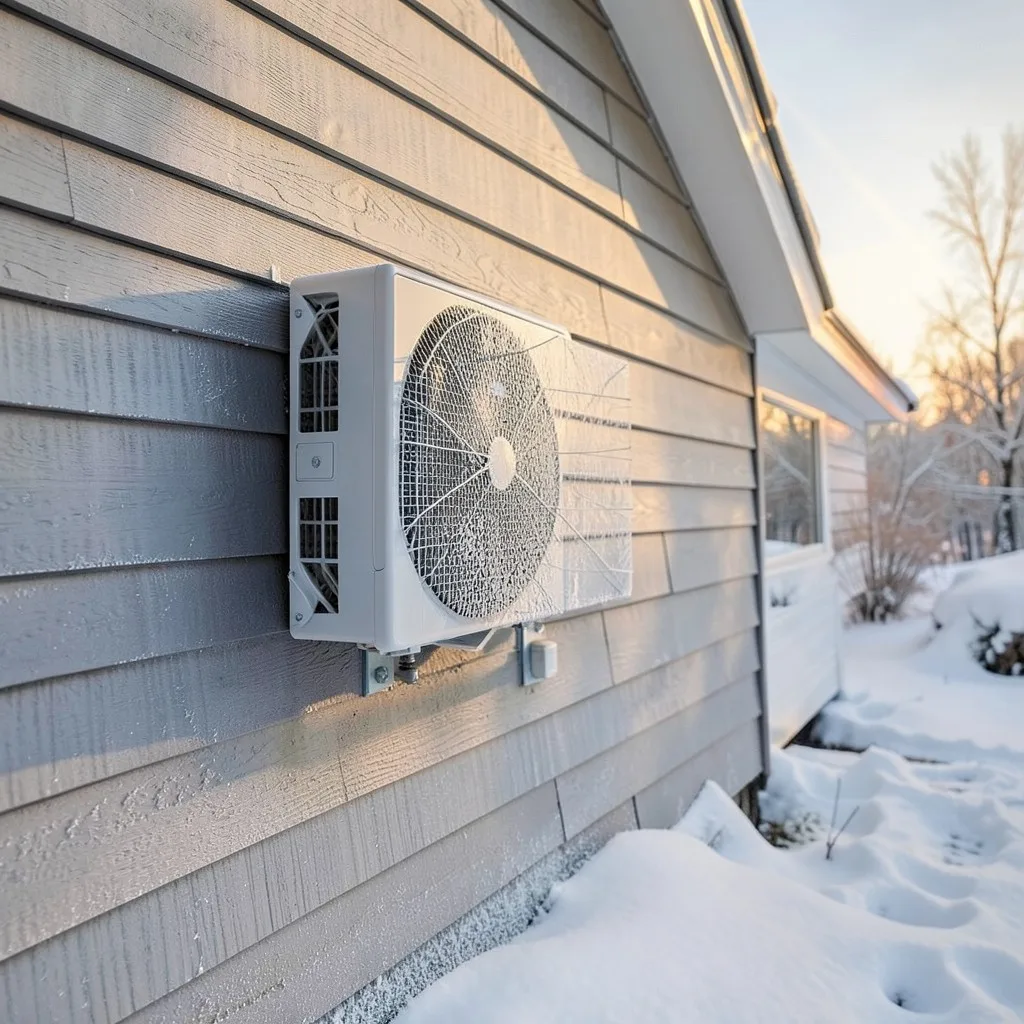
Existing heat pump ices over and stays iced
Normal defrost handles light frost; an ice ball means defrost controls, sensors, or charge need service.
Electric bills spike in winter
Auxiliary resistance heat running more than it should — controls, balance point, or capacity problem.
All-electric home heated by baseboards or an electric furnace
A heat pump typically delivers the same heat for a half to a third of the electricity.
Chasing utility rebates or the federal credit
Heat pumps carry the largest residential HVAC incentives available — the biggest federal credit in the category plus local stacking.
How does a Sloan call work?
-
Describe the project
Age of the current system, rooms that never worked, fuel type, timeline — replacement in Sloan is a design job, and context shapes quote quality.
-
Matched to an installer
The contractor who calls back installs in Sloan week in, week out, and can show licensing and insurance without being chased.
-
Numbers precede dollars
Sizing comes from your house, not your driveway. Expect the load calculation, and expect model numbers on the paperwork.
-
No exclusivity, ever
Take the quote and set it against any competitor. The job goes to whoever earns it on scope — that is how this is supposed to work.
How does heat pump services pricing work in Sloan?
Pricing is set by the independent contractor — never by us — and the ground rules are the same on every call we route: the diagnostic fee is stated on the phone before dispatch, any after-hours premium is named up front, and you receive a written quote you can compare against any other bidder before authorizing work.
That structure isn't generosity — it's how the network stays healthy. A Nevada contractor who surprises homeowners at the doorstep stops receiving routed calls, which means the pros who remain are the ones whose pricing conversations survive daylight. You benefit from that selection every time you dial.
| What to expect | When | Why it matters |
|---|---|---|
| Diagnostic fee disclosed | On the phone, before dispatch | No doorstep surprises — the visit price is known before a truck rolls |
| Findings shown, not described | During the visit | The failed part and its readings, in front of you |
| Written quote | Before any work begins | Yours to keep and shop — comparison is expected here |
| Scope itemized | In the quote | Model numbers and labor scope in writing |
Researching typical national figures first? Read Heat Pump Installation Cost, Before and After Incentives — the itemized national breakdown, kept separate from this routing service.
Timing a heat pump service call in Sloan
Demand for heat pump service around Sloan is not flat — it spikes with the first hard cold snap, when every marginal system in a 2,100-HDD/3,400-CDD climate gets stress-tested in the same week. Contractors triage: genuine emergencies first, vulnerable households next, everyone else into a queue measured in days. The same call placed two weeks earlier lands in a calendar measured in hours.
The practical move: treat the first mild-weather symptom — longer cycles, new noises, weaker output — as the booking trigger. Planned work quoted in the off-season gets sharper bids, because installers are filling calendars instead of rationing them.
The regional pattern is worth knowing too: housing around Sloan clusters near a 1995 vintage, which means equipment installed in the same boom years fails in the same window. When you hear a neighbor's system die, treat it as data — yours shares its birthday. A pre-season inspection that year is the cheapest decision on this page.
Collecting replacement bids?
Add a real quote from an independent Nevada installer — load calculation, model numbers, scope in writing.
Call (877) 565-3062What separates a good install from an expensive one?
The equipment brand matters less than the installation decisions around it: a load calculation instead of a driveway guess, ducts measured for the airflow the new system actually needs, refrigerant charge and airflow verified with instruments at commissioning, and the permit pulled rather than skipped. Two crews installing the identical unit can deliver measurably different efficiency for its entire fifteen-year life.
Read competing bids by scope, not bottom line. Model numbers for every component, line-set and drain handling, electrical work, permit responsibility, commissioning steps, and the labor warranty — in writing. The cheapest bid is usually cheapest because something on that list is missing, and the missing item is rarely missing by accident.
Which guides might save this Sloan service call?
- Heat Pump Not Heating? Normal vs Broken, Sorted — Cool-feeling air, frost, steam clouds — much heat pump “failure” is normal operation. What is actually broken vs physics, and when to call.
What to have ready when the contractor calls back
Techs solve faster with context. The five minutes before a Sloan visit that pay for themselves:
- Pets secured and gate codes shared: the two most common arrival delays, both free to prevent.
- The symptom timeline: when it started, whether it comes and goes, and what (if anything) changed in the house right before.
- The filter situation: when it was last changed and its size — the answer redirects a surprising number of diagnoses.
- The electrical panel location — and whether any breaker has tripped during the failure.
- Any past paperwork: prior repair invoices or tune-up sheets turn guesswork into history.
- Your equipment labels: a phone photo of the data plate on the unit gives the contractor model and age before arrival.
Which terms will your Sloan contractor use on this job?
Heat Pump
A heat pump is a refrigerant-based system that moves heat rather than generating it: out of the house in summer (exactly like an air conditioner) and into the house in winter, by extracting heat from outdoor air even when that air is cold. Because moving heat takes far less energy than creating it, a heat pump typically delivers two to four units of heat per unit of electricity consumed.
Balance Point
A heat pump’s balance point is the outdoor temperature at which its heating output exactly equals the house’s heat loss. Above it, the heat pump carries the load alone; below it, backup heat — electric strips or a furnace — must make up the difference. Typical balance points fall between 25 and 40°F depending on equipment capacity and the house envelope.
HSPF2
HSPF2 (Heating Seasonal Performance Factor 2) rates a heat pump’s heating efficiency: seasonal heat output in BTUs divided by watt-hours of electricity consumed, under the test conditions in force since 2023. The federal minimum is 7.5 HSPF2; efficient units score 8.5 or higher. Higher numbers mean more heat per kilowatt-hour, which directly sets winter operating cost.
SEER2
SEER2 (Seasonal Energy Efficiency Ratio 2) is the federal efficiency metric for air conditioners and heat pumps in cooling mode, in force since 2023. It measures seasonal cooling output divided by electricity consumed, tested under more realistic external duct pressure than the old SEER standard — which is why SEER2 numbers run about 4.5% lower than equivalent SEER ratings.
Every term links to its full glossary entry — the practical homeowner angle included. All 50 terms →
Before you hire in Sloan: the five-minute check
Every contractor in this network is an independent Nevada business responsible for its own licensing, insurance, and workmanship — and every legitimate pro expects to be verified. The checks below take five minutes and filter out nearly every bad outcome in residential HVAC:
- Get the diagnostic fee and its terms (does it credit toward the repair?) stated before the visit is booked.
- Compare at least one competing bid on any major repair or replacement. Contractors who earn jobs on scope expect this; the ones who resent it are telling you why.
- Insist on the failed part being shown and the fix explained — techs who diagnosed correctly enjoy this part.
- Confirm the license: ask for the number and check it against Nevada's contractor licensing authority before work begins.
- For quotes: model numbers, written scope, and permit handling in the document — a one-line quote is a red flag stated politely.
None of this is adversarial — it's how good contractors prefer to work. A Nevada pro who quotes fees on the phone, shows the failed part, and writes scope you can shop has nothing to fear from a checklist; the visit simply goes faster with an informed homeowner on the other side of it. The rare contractor who bristles at verification has answered the most important question before any work began.
Heat Pump Services in Sloan — common questions
What incentives apply to heat pumps right now?
The federal 25C credit: 30% of installed cost up to the category’s largest annual cap, for qualifying models. Many states and utilities stack rebates from a few hundred dollars to several thousand on top, especially where gas-to-electric conversion is policy. Check dsireusa.org and your utility, and get the model’s qualification status in writing from the contractor before signing.
Do heat pumps actually work in cold climates?
Modern cold-climate models hold most of their rated capacity at 5°F and keep producing useful heat below -10°F — the Maine and Minnesota markets run on them. The engineering requirements are real, though: proper sizing to the heating load (not the cooling load), a correctly set balance point, and adequate backup for the coldest tail of the year. The technology stopped being the limitation a decade ago; installation quality is the limitation now.
Why is there ice on my heat pump — and when is it a problem?
Light frost on the outdoor coil in cold, damp weather is normal, and the unit periodically reverses into defrost to clear it (steam and a whooshing sound — also normal). A solid ice shell, ice that persists through defrost cycles, or fan blades striking ice are service calls: typically defrost controls, a bad sensor, low charge, or blocked drainage under the unit.
What does a heat pump cost to run versus a gas furnace?
It hinges on local rates. A heat pump moving 3 units of heat per unit of electricity competes with gas whenever electricity costs less than about 3–4× gas per unit of energy. At typical national averages the heat pump wins in mild and moderate climates and roughly ties in cold ones — where dual-fuel setups capture the best of both. Your utility’s actual rates decide it, not national averages.
How cold does it get in Sloan, and what does that mean for heating?
Heating systems here are designed against winter lows near 28°F, across roughly 2,100 heating degree days a year. Cold desert winters that surprise transplants means a genuine no-heat failure is a same-day problem — and in freezing stretches, a pipe-protection problem too.
What kind of HVAC equipment is common in Sloan homes?
Rooftop package units and heat pumps built for extreme dry heat; a failed capacitor at 112° becomes a same-day emergency, not a maintenance item. The median local home dates to about 1995, so contractors here spend as much time on the distribution side — ducts, airflow, controls — as on the equipment itself.
Does weather here really change what heat pump service costs?
Indirectly but reliably. With 2,100 heating and 3,400 cooling degree days a year, local failures cluster around first-stress weather — and when every truck in Sloan is booked, after-hours premiums and multi-day queues do the pricing. The same job in shoulder season books same-day at standard rates.
Am I committed to anything by calling?
No. The call connects you with an independent local contractor who quotes their diagnostic fee up front. You can book, decline, or take the quote shopping — contractors in this network expect comparison and earn jobs on scope and price, not on capturing your phone number.
Prefer a callback from a Sloan pro?
Same zip-matched routing as the phone line — an independent Nevada contractor calls you, fee quoted before any visit.