
Ductwork Repair in Winter Springs, FL
Ductwork repair in Winter Springs: one call routes you to an independent Florida contractor that had registered your ZIP code for this work as of the routing data dated July 12, 2026. Before you call, this page helps you decide whether the ducts are the problem (measured, not guessed), what a sealing or repair proposal names, and which ducts ENERGY STAR says to seal first. The contractor states its own fee and earliest visit; the decision to hire stays with you.
Climate figures are regional: rounded from NOAA 1991–2020 normals for Orlando, FL, shared by every market in that region; design temperatures are regional planning values. Coverage counts come from the routing data dated July 12, 2026. See our methodology.
U.S. Census Bureau, American Community Survey 2023 5-year estimates (tables B25003, B25024, B25035), city-level. These four figures are specific to Winter Springs.
Electric utility on record for Winter Springs ZIP codes: Florida Power & Light Co (investor-owned, 2023 average residential rate 15.0¢/kWh); and Duke Energy Florida, LLC (investor-owned, 2023 average residential rate 18.1¢/kWh). U.S. Department of Energy / OpenEI, “U.S. Electric Utility Companies and Rates: Look-up by Zipcode (2023)” (EIA-861 data), read 2026-09-12; matched to the ZIP codes on record for this city in the routing data. A rate is the utility's 2023 residential average, not your tariff.
Incentive programs on record at DSIRE for Winter Springs (read 2026-09-12): Florida Power and Light - Residential Energy Efficiency Program. Programs whose owner is the electric utility on record for a Winter Springs ZIP code, or Winter Springs itself. Names and links only; amounts and eligibility are on DSIRE’s program page (Florida listing). Ask the contractor which program it will file for and the date of the terms it quotes.
Which local conditions drive which failures?
Around Winter Springs, the climate ledger reads 550 heating degree days to 3,450 cooling — a cooling-dominated market. Regional design practice plans for 94°F summer peaks and 38°F winter lows, which is why the serious failure season here runs through the cooling months.
A Winter Springs service call should start with the house, not the unit. Heat pump splits are common in newer subdivisions; builder-installed equipment of similar age is often seen across a neighborhood. Ask the contractor what it found in yours; this page holds no per-house data.
In Winter Springs, routing runs on the standard category; whether a contractor takes evening or weekend calls is its own decision, so ask. Coverage is matched at the ZIP-code level (2 ZIPs locally), so the contractor who answers registered this area.
Nearby Casselberry and Goldenrod are covered markets in the same data. Winter Springs itself is a compact multi-zip market — the cooling line, and duct services on record across 2 ZIP codes. These are routing facts from a dated export; they say nothing about how many contractors answer or how quickly one arrives.
Coverage statements on this page reflect the routing data on file as of July 12, 2026; the contractor confirms availability on the call.
Is ductwork repair on record for your Winter Springs ZIP code?
Checks whether your ZIP code appears for duct services in the routing data dated July 12, 2026. It does not check availability, count contractors, or state a response time.
Source: routing data on record as of July 12, 2026. No prices, contractor names or counts are published.
Symptoms that lead to this call in Winter Springs, and what they usually mean
One room never conditions no matter the thermostat
A crushed, kinked, or disconnected branch run — common where flex duct meets foot traffic or settling.
Whistling or rushing air sounds at registers
Undersized or leaking ducts running high static pressure.
Attic or crawlspace is oddly warm in winter / cool in summer
You are conditioning it — supply leaks dump paid-for air outside the living space.
Dust returns immediately after cleaning
A leaking return can draw air from an attic or crawlspace, bypassing the filter — a question for a leakage test, not for another cleaning.
New equipment underperforming
A modern system pushing through failed ducts inherits every old problem — measurement finds it fast.
Is it the ducts? The three questions that decide the booking
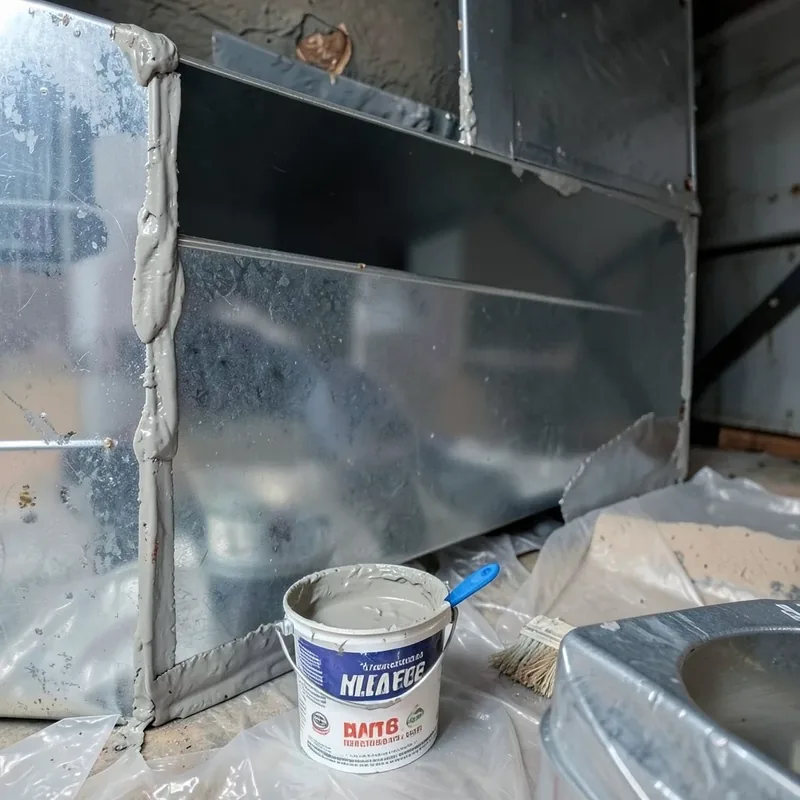
ENERGY STAR’s guidance is that ducts are “often big energy wasters”, that sealing should focus first on ducts that run through an attic, crawlspace, unheated basement or garage, and that leaks are sealed with mastic sealant or metal tape — never duct tape. Whether your ducts are the problem is not decided by that guidance; it is decided by measurement. Before you book, settle three things:
- Where do the ducts run? Ducts in an attic, crawlspace, unheated basement or garage are the ones ENERGY STAR says to seal first. If yours run entirely inside the living space, ask the contractor what problem the work would solve before agreeing to any of it.
- Will the contractor measure before quoting? Ask for a leakage or static-pressure measurement first and for the same measurement repeated after the work, so the proposal and the result are both numbers you can read. If no measurement is offered, you have learned something about the proposal.
- What method and which runs? Ask that the proposal name the sealing method (mastic or metal tape; aerosol sealant only with a stated reason), whether accessible ducts are insulated, and whether the return side and plenum connections are included.
ENERGY STAR, “Heat & Cool Efficiently” and “Duct Sealing”, read 2026-09-07. Editorial guidance, not reviewed by a licensed HVAC professional. Full guide, sources and proposal checklist: Ductwork Repair guide.
How does a Winter Springs call work?
-
Describe it room by room
Which Winter Springs rooms fail, what you see at the registers, what changed recently — airflow problems leave fingerprints.
-
The distribution-side pro
An independent Florida contractor registered for duct work in Winter Springs. Ask whether it inspects, tests and repairs ductwork — the half of HVAC many companies only glance at.
-
Measurement before money
Ask for a camera inspection and leakage testing before any scope is written, so what you approve is grounded in evidence.
-
Proof, then payment
Ask that the job close with the same instrument that opened it: before and after numbers, side by side.
How does ductwork repair pricing work in Winter Springs?
Pricing is set by the independent contractor — never by this site, which takes no part in the quote and adds nothing to your bill. The contractor decides its diagnostic fee, whether that fee credits toward a repair, any after-hours premium, and its parts and labor rates. What this page can do is tell you what to ask before you agree to a visit.
Ask the questions below on the phone. A contractor that answers them plainly is easy to compare against any other bidder; one that cannot say what the visit costs until it arrives has told you something useful too. You are not obliged to book, and comparing bids is your right.
| Ask | When | Why it matters |
|---|---|---|
| Is the leakage test charged separately, and is it credited if I proceed? | On the phone, before booking | The test is what turns the proposal into a number |
| Will I get the before-and-after leakage numbers in writing? | When you book | The after-measurement is the proof the sealing worked |
| Can I have the scope and price in writing before work begins? | Before authorizing | Yours to keep and shop — comparison is normal |
| Is the return side included in the sealing scope? | In the quote | Return leaks pull attic or crawlspace air past the filter |
Researching typical national figures first? Read Ductwork Repair, Sealing & Replacement Costs — the itemized national breakdown, kept separate from this routing service.
Timing ductwork repair around the Winter Springs season
The regional heating season sets the rhythm: around Orlando, occasional overnight freeze warnings concentrate the hardest running into narrow windows, and the first hard cold snap is when a marginal system is most likely to fail. Whether that changes a contractor's lead time or price is a question for the contractor.
The practical move: treat the first mild-weather symptom — longer cycles, new noises, weaker output — as the booking trigger, so quotes can be gathered before the season rather than during it. Ask each contractor what it can offer and when.
Regional figures say nothing about your own equipment near Winter Springs. Its data plate and a pre-season inspection do.
Airflow problems in a Winter Springs home?
Measurement first, scope second, money third — in that order.
Call (877) 565-3062Should you fix the ducts before blaming the equipment?
Airflow and envelope problems masquerade as equipment failures constantly: rooms that never condition, systems that run endlessly, bills that creep with no rate change. The equipment gets blamed because it's visible — but the ducts, the returns, and the insulation above the ceiling decide how much of the equipment's output ever reaches the living space.
This is why measurement comes first. A leakage test or static-pressure reading turns the invisible half of the system into numbers, the scope gets written against those numbers, and the after-measurement proves the fix. ENERGY STAR’s guidance is that sealing and insulating ducts can improve the efficiency of a heating and cooling system by as much as 20 percent, sometimes much more (Heat & Cool Efficiently, read 2026-09-10) — a range, not a promise about your house, which is what the before-and-after measurement is for.
The shared ductwork repair guide covers what the service involves, when it is an emergency, how to compare written proposals, and the call-preparation tool — kept in one place rather than repeated on every city page.
Which guides might save this Winter Springs service call?
- Hot Upstairs, Cold Downstairs: Fixing Uneven Temperatures — Rooms that never match the thermostat are usually a distribution problem — ducts, returns, stack effect — not equipment. The fix hierarchy, cheapest first.
What to have ready before the visit
Everything below is something to have ready or to note down — not a diagnosis. Before your ductwork repair visit in Winter Springs:
- Which rooms never reach temperature, where you hear whistling or rushing air, and whether dust returns quickly after cleaning.
- Where the ducts run and whether they are accessible; any visible disconnections, crushed runs or damp spots.
- Any prior sealing work or leakage test results, and the age of the duct system if you know it.
- The age of the heating and cooling equipment: a replacement moment is the cheapest time to correct ducts.
Which terms will your Winter Springs contractor use on this job?
Static Pressure
Static pressure is the resistance the blower must overcome to push air through the duct system — HVAC’s blood pressure, measured in inches of water column. Each piece of equipment has a rated external static pressure on its data plate; a reading well above it means the blower is straining against undersized or restrictive ducts.
Plenum
A plenum is the sheet-metal distribution box that connects HVAC equipment to the duct system. The supply plenum sits on the equipment’s outlet, receiving all conditioned air before it branches into individual ducts; the return plenum collects incoming air just before the filter and blower. The AC’s indoor coil typically lives inside or atop the supply plenum.
MERV Rating
MERV (Minimum Efficiency Reporting Value) rates an air filter’s ability to capture particles, from 1 to 16 in residential contexts. MERV 8 catches dust and pollen; MERV 11 adds finer dust and pet dander; MERV 13 captures smoke and many virus-carrying droplets. Higher ratings filter better but resist airflow more.
Every term links to its full glossary entry — the practical homeowner angle included. All 50 terms →
How to verify the pro who shows up
Every contractor this line routes to is an independent Florida business responsible for its own licensing, insurance and workmanship. This site cannot promise what any of them will say or do; it can tell you what to ask:
- Ask which license or registration covers this work at your address and for the number on the estimate; the Florida lookup this site has read is linked in the license section — check the number there before work begins.
- Ask for the certificate of insurance (liability and workers’ compensation) before the visit, and keep a copy.
- Ask for a leakage or static-pressure measurement before the quote and for the same measurement after the work, so the proposal and the result are numbers you can read.
- Ask which runs are sealed, insulated or replaced, and by what method (mastic sealant or metal tape per ENERGY STAR; aerosol sealant only with a stated reason).
- Ask whether the return side and the plenum connections are included, and how ducts in the attic, crawlspace, garage or unheated basement will be reached.
- Ask for the scope and the price in writing before work begins.
- Compare bids against the same measurement, not against each other’s descriptions.
None of this is adversarial. A Florida pro who states fees on the phone, shows what failed and writes scope you can shop has nothing to fear from a checklist; the visit goes faster with an informed homeowner on the other side of it. A contractor who bristles at verification has answered the most important question before any work began.
Which license should you ask about in Florida?
The Department of Business and Professional Regulation, Construction Industry Licensing Board states:
“The Construction Industry Licensing Board is responsible for licensing and regulating the construction industry.”
That rule is written for contractors who work on the heating and cooling system itself. Ask the contractor whether the work at your address falls under it and, if so, for its license number, then look the number up in the DBPR Licensing Portal — License Search (search by name, license number, or city). If it holds no such license, ask which registration or license covers the work instead, and get the answer in writing.
Source: DBPR Construction Industry Licensing Board (license categories include Class A, Class B and Class C Air-Conditioning Contractor), read 2026-09-06.
Winter Springs ductwork repair: the short answers
Why is my return duct the one to worry about?
Supply leaks waste money; return leaks affect health. A leaking return running through an attic, garage, or crawlspace inhales from that space — insulation fibers, dust, humidity, whatever is in a garage — and delivers it past the filter. Ask whether the return side is included in the sealing scope, and ask first about any duct that runs through an attic, crawlspace or garage (ENERGY STAR, “Duct Sealing”, read 2026-09-07).
Repair, seal, or replace — how do I decide?
Driven by condition and material. Disconnected or crushed runs: repair. Sound metal or rigid duct with leaky joints: seal. Disintegrating flex duct (pre-1990s gray flex especially), interior lining breaking down, or a layout that never worked: replace. A camera inspection plus a leakage number tells you which category you are in; ask what the inspection costs and whether it is credited if you proceed.
Can bad ducts really negate a new high-efficiency system?
Arithmetic says they can: a 96% furnace pushing through ducts that leak a quarter of their air delivers about 72% of its heat to the living space — an illustration, not a measurement of your house. ENERGY STAR’s guidance is that sealing and insulating ducts can improve system efficiency by as much as 20 percent, sometimes much more (read 2026-09-10). This is why a leakage or static-pressure test belongs in every replacement quote.
How do I know if my ducts leak?
Symptoms suggest; measurement confirms. Suggestive: rooms that will not condition, dusty house despite good filters, high bills with normal equipment, a mysteriously warm attic in January. Confirmation is a duct-leakage test that pressurizes the system and measures loss — a modest flat-fee visit and the best diagnostic money in HVAC, because it converts guesswork into a number before and after repair.
Does the age of Winter Springs housing change what goes wrong?
Only the house itself can say. Older ductwork, earlier insulation standards and undersized returns show up in service calls regardless of the equipment brand; a data-plate photo and a look at the ducts tell you where your own home sits. This page holds no per-house data.
Does the weather here change what ductwork repair costs?
This site cannot say what any contractor charges, in any season. What the regional figures do say is when the load peaks — 550 heating and 3,450 cooling degree days a year, concentrated in first-stress weather — so a planned job booked outside that peak is a question worth asking about. Ask the fee, the earliest visit and any after-hours premium before you agree to a visit.
Who actually shows up when I call?
An independent, third-party contractor whose registered service area covered your FL ZIP code in the routing data. This is a referral service: the contractor sets pricing, runs the visit, and answers for the work, and you owe nothing for the connection itself.
Prefer to talk it through? One call does it
Same ZIP-matched routing: your address picks the independent contractor. Ask its diagnostic fee on the call before agreeing to a visit; this site sets no prices.
Call (877) 565-3062No obligation · compare any quote you receive · how this works