
AC Repair in Ridgefield, WA
The Ridgefield answer to AC repair is local by design: your zip code routes to an independent contractor who registered this territory, not a call center reading a script. It matters here because local equipment is sized around a 85°F design day, and because mild summers with heat-dome exceptions that overwhelm AC-less homes mean the diagnosis has to be right the first time.
Climate figures rounded from NOAA 1991–2020 normals for Seattle–Tacoma, WA; design temperatures are regional planning values. See our methodology.
U.S. Census Bureau, American Community Survey 2023 5-year estimates (tables B25003, B25024, B25035), city-level.
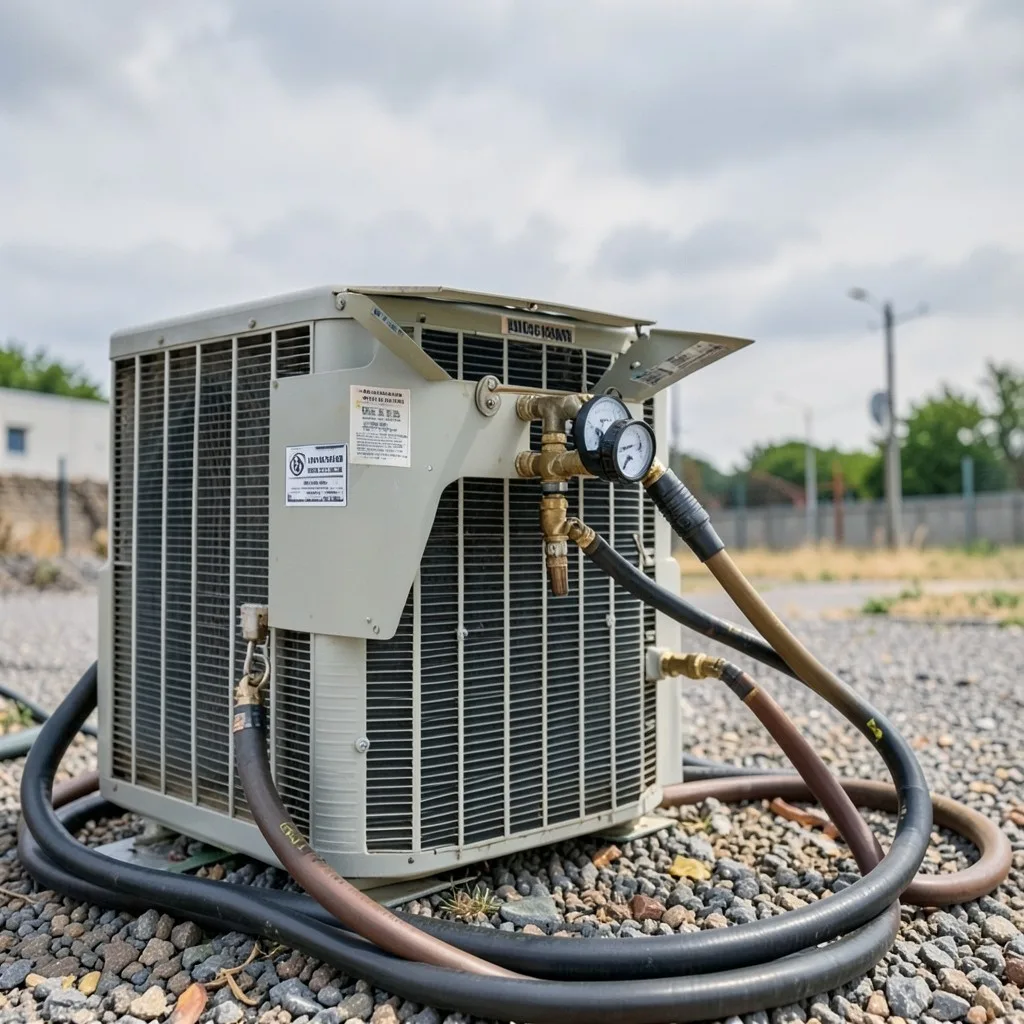
What does Ridgefield do to heating and cooling equipment?
Equipment around Ridgefield lives between 24°F winters and 85°F summers. The annual load — roughly 4,550 heating degree days against 200 cooling — is the quiet arithmetic behind local sizing, local failure timing, and the local repair queue. Mild summers with heat-dome exceptions that overwhelm AC-less homes; long, damp heating seasons. Both arrive every year.
The median home here was built around 1980, and 46-year-old houses come with predictable HVAC baggage: original duct runs, evolving insulation standards, and equipment closets designed for smaller machines. Gas furnaces and electric baseboards are giving way to ducted and ductless heat pumps at the fastest rate in the country; insulation upgrades pair with nearly every conversion.
Coverage in this network is zip-code precise: Ridgefield routing spans the local zip code, matched to independent contractors licensed for Washington. Calls route during extended business hours; after-hours coverage depends on which local contractors run on-call rotations.
Dispatch here shares a bench with nearby Roy and Amboy, so a booked-out day locally still finds an available crew. Ridgefield itself is a single-zip market — both heating and cooling lines active across one zip — and market size shapes service reality: how fast a AC part gets sourced, and how deep the comparison-bid bench runs.
What are Ridgefield homeowners describing — and what does it mean?
System runs but the air is not cold
Low refrigerant from a leak, a failed compressor or condenser fan, or a heavily fouled outdoor coil rejecting no heat.
Ice on the refrigerant lines or indoor coil
Airflow starvation (filter, blower) or low charge. Running it iced destroys compressors — shut it off and let it thaw.
Outdoor unit hums but the fan does not spin
Classic failed capacitor — one of the cheapest and most common AC repairs there is.
Breaker trips when the AC starts
Hard-starting compressor, shorted wiring, or a seized fan motor. Repeated resets risk turning a repair into a replacement.
Water around the indoor unit
A clogged condensate drain or rusted pan — minor today, ceiling damage next month.
It cools, but runs all day and the bill shows it
Marginal charge, dirty coils, duct leakage, or an aging compressor limping below capacity.
Calling from Ridgefield — what are the four steps?
-
Describe the cooling failure
Tell us what quit: the whole system, just the outdoor fan, or the cold itself. That detail routes your Ridgefield call to the right crew the first time.
-
Zip-matched routing
Not a national queue: an independent local contractor who works Ridgefield in season, when mild summers with heat-dome exceptions that overwhelm AC-less homes fill every calendar in the area.
-
The fee comes first
Diagnostic pricing is quoted during the call, and in peak season so is the realistic arrival window.
-
Fixed on the spot, usually
The common culprits are stocked and swapped same-visit. If the diagnosis is compressor-grade, you get options on paper, not pressure.
How does ac repair pricing work in Ridgefield?
Pricing is set by the independent contractor — never by us — and the ground rules are the same on every call we route: the diagnostic fee is stated on the phone before dispatch, any after-hours premium is named up front, and you receive a written quote you can compare against any other bidder before authorizing work.
That structure isn't generosity — it's how the network stays healthy. A Washington contractor who surprises homeowners at the doorstep stops receiving routed calls, which means the pros who remain are the ones whose pricing conversations survive daylight. You benefit from that selection every time you dial.
| What to expect | When | Why it matters |
|---|---|---|
| Diagnostic fee disclosed | On the phone, before dispatch | No doorstep surprises — the visit price is known before a truck rolls |
| Findings shown, not described | During the visit | The failed part and its readings, in front of you |
| Written quote | Before any work begins | Yours to keep and shop — comparison is expected here |
| After-hours premium named | When you book | Night and weekend rates stated before you commit |
Researching typical national figures first? Read AC Repair Costs: From Capacitor to Compressor — the itemized national breakdown, kept separate from this routing service.
The Ridgefield seasonality problem, used to your advantage
The local cooling season sets the rhythm: around Seattle–Tacoma, mild summers with heat-dome exceptions that overwhelm AC-less homes concentrate failures into narrow windows, and the first real heat wave converts every deferred repair in the area into a same-week emergency simultaneously. Booking against that calendar — shoulder season for planned work, first-symptom for repairs — is the cheapest optimization available.
If the system does fail at peak, say so plainly when you call — symptom, occupants, indoor temperature. Triage is real, and accurate detail moves genuine emergencies up the queue honestly. Either way, the calendar is a price lever most homeowners never think to pull.
The regional pattern is worth knowing too: housing around Ridgefield clusters near a 1980 vintage, which means equipment installed in the same boom years fails in the same window. When you hear a neighbor's system die, treat it as data — yours shares its birthday. A pre-season inspection that year is the cheapest decision on this page.
Every degree hotter makes the queue longer
Same-day priority goes to no-cool calls. One call starts it.
Call (877) 565-3062Repair or replace — how should a Ridgefield contractor frame it?
Age is the axis everything turns on. Equipment in its first decade earns repairs almost automatically — wear parts fail, get swapped, and the system runs on. Past the twelve-to-fifteen-year mark, each major component failure competes with replacement money: the part being replaced is the same age as every part that hasn't failed yet, and modern equipment would also cut every future utility bill.
Three findings should always trigger a replacement conversation rather than a quiet repair: a compromised heat exchanger on a furnace (the failure that ends them), compressor-grade work on an aging cooling system, and any major sealed-system repair on equipment running an obsolete refrigerant. A Washington-licensed contractor who raises these honestly in Ridgefield — with the failed part and its readings in front of you — is doing the job right. One who patches silently past them is selling you the same failure twice.
Which guides might save this Ridgefield service call?
- AC Running but Not Cooling? Diagnose It Like a Tech — When the AC runs but the house stays warm: filter, breakers, outdoor unit, ice — the diagnostic order techs use, and which findings mean call now.
- AC Leaking Water Inside? Act Fast, Then Fix the Drain — Water around the indoor AC unit is usually a clogged condensate drain — minor today, ceiling damage next week. Emergency steps and the real fix.
- AC Breaker Keeps Tripping? Stop Resetting and Read This — An AC that trips its breaker is pulling more current than the circuit allows — hard starts, shorts, seized motors. Why repeat resets are the wrong move.
Before the truck reaches your Ridgefield address
A prepared homeowner shortens the diagnosis and sharpens the quote. Before your AC repair visit in Ridgefield, pull together:
- Clear access: a path to the equipment, the attic hatch, or the crawlspace door saves billable minutes on arrival.
- Your equipment labels: a phone photo of the data plate on the unit gives the contractor model and age before arrival.
- Any past paperwork: prior repair invoices or tune-up sheets turn guesswork into history.
- The electrical panel location — and whether any breaker has tripped during the failure.
- The filter situation: when it was last changed and its size — the answer redirects a surprising number of diagnoses.
- The symptom timeline: when it started, whether it comes and goes, and what (if anything) changed in the house right before.
Which terms will your Ridgefield contractor use on this job?
Capacitor (HVAC)
An HVAC capacitor stores and releases electrical charge to start and smooth the running of the system’s motors — compressor, condenser fan, and blower. Capacitors weaken with heat and age, and a failed run capacitor is the single most common air-conditioning repair: the outdoor unit hums but the fan will not spin.
Refrigerant
Refrigerant is the working fluid of air conditioners and heat pumps — a chemical engineered to evaporate and condense at useful temperatures, absorbing heat indoors and releasing it outdoors as it cycles. It circulates in a sealed loop and is never consumed: a system low on refrigerant has a leak, not a thirst.
Condenser
The condenser is the outdoor unit of an air conditioner or heat pump. Inside its cabinet, hot refrigerant vapor from the house is compressed, then condensed back to liquid as the big fan pulls outdoor air across the coil — dumping the heat collected indoors into the outside air. Compressor, condenser coil, and fan form the heat-rejection half of the cooling cycle.
TXV (thermostatic expansion valve)
A TXV (thermostatic expansion valve) is the metering device that controls how much refrigerant enters the evaporator coil, adjusting flow moment to moment so the coil stays fully fed without flooding liquid back to the compressor. It senses coil outlet temperature through a small bulb and throttles automatically — a mechanical regulator at the heart of the cooling circuit.
Every term links to its full glossary entry — the practical homeowner angle included. All 50 terms →
Vetting a AC repair contractor in Washington
Every contractor in this network is an independent Washington business responsible for its own licensing, insurance, and workmanship — and every legitimate pro expects to be verified. The checks below take five minutes and filter out nearly every bad outcome in residential HVAC:
- Ask for the certificate of insurance — liability and workers’ comp. A pro emails it in minutes; hesitation is the answer.
- Confirm the license: ask for the number and check it against Washington's contractor licensing authority before work begins.
- Compare at least one competing bid on any major repair or replacement. Contractors who earn jobs on scope expect this; the ones who resent it are telling you why.
- Check the labor warranty in writing — 1–2 years on repairs is standard; "we stand behind our work" is not a term.
- For after-hours calls: the premium structure quoted on the phone, parts billed at standard book prices.
None of this is adversarial — it's how good contractors prefer to work. A Washington pro who quotes fees on the phone, shows the failed part, and writes scope you can shop has nothing to fear from a checklist; the visit simply goes faster with an informed homeowner on the other side of it. The rare contractor who bristles at verification has answered the most important question before any work began.
Questions Ridgefield homeowners actually ask
Why does my breaker trip every time the AC kicks on?
A compressor drawing locked-rotor amps (hard starting), a shorted motor winding, or a wiring fault. Resetting the breaker over and over is the worst response — breakers trip to prevent fires and burned windings. One reset is a test; repeated trips are a service call with the system left off.
Is it bad to keep running an AC that is not cooling well?
Yes, genuinely. A system running with ice on the coil or low charge is cooking its compressor — the one component whose failure typically totals the unit. If you see ice, shut cooling off, run the fan to speed the thaw, and book service. Limping through a heat wave can turn a bottom-of-the-ladder repair into a full system replacement.
Why is my AC blowing warm air?
Check the simple things first: thermostat set to COOL and below room temperature, a clean filter, and both breakers on (indoor and outdoor units are often on separate circuits). If the outdoor fan is not spinning, a capacitor is the leading suspect. If everything runs but the air never cools, low refrigerant from a leak is the most common professional diagnosis.
What maintenance actually prevents AC breakdowns?
Three things carry most of the weight: filters changed on schedule (monthly in heavy season), an outdoor coil kept clean and clear of vegetation, and an annual professional check of charge, capacitors, contactor, and drain line. Capacitors in particular telegraph their death in measurements a year before they strand you in July.
How does Ridgefield heat affect AC sizing and repair?
Local design practice sizes cooling around a 85°F design temperature with about 200 cooling degree days a year. Mild summers with heat-dome exceptions that overwhelm AC-less homes means marginal components — weak capacitors, fouled coils, low charge — fail during peak load rather than before it, which is why pre-season checks pay off here.
What kind of HVAC equipment is common in Ridgefield homes?
Gas furnaces and electric baseboards are giving way to ducted and ductless heat pumps at the fastest rate in the country; insulation upgrades pair with nearly every conversion. The median local home dates to about 1980, so contractors here spend as much time on the distribution side — ducts, airflow, controls — as on the equipment itself.
When is the cheapest time to book AC repair in Ridgefield?
Off-peak. Locally that means late spring through early fall — the heating rush is when queues and premiums appear. Planned work quoted off-peak also gets sharper bids, since contractors are filling calendars rather than rationing them.
Who actually shows up when I call?
An independent, third-party contractor whose registered service area covers your WA zip code — not an out-of-market call center crew. We are a referral service: the contractor sets pricing, runs the visit, and answers for the work, and you owe nothing for the connection itself.
Prefer a callback from a Ridgefield pro?
Same zip-matched routing as the phone line — an independent Washington contractor calls you, fee quoted before any visit.