
AC Repair in Marshfield, MA
The Marshfield answer to AC repair is local by design: your zip code routes to an independent contractor who registered this territory, not a call center reading a script. It matters here because local equipment is sized around a 86°F design day, and because sea-tempered summers with humid spells mean the diagnosis has to be right the first time.
Climate figures rounded from NOAA 1991–2020 normals for Brockton/Plymouth, MA; design temperatures are regional planning values. See our methodology.
U.S. Census Bureau, American Community Survey 2023 5-year estimates (tables B25003, B25024, B25035), city-level.
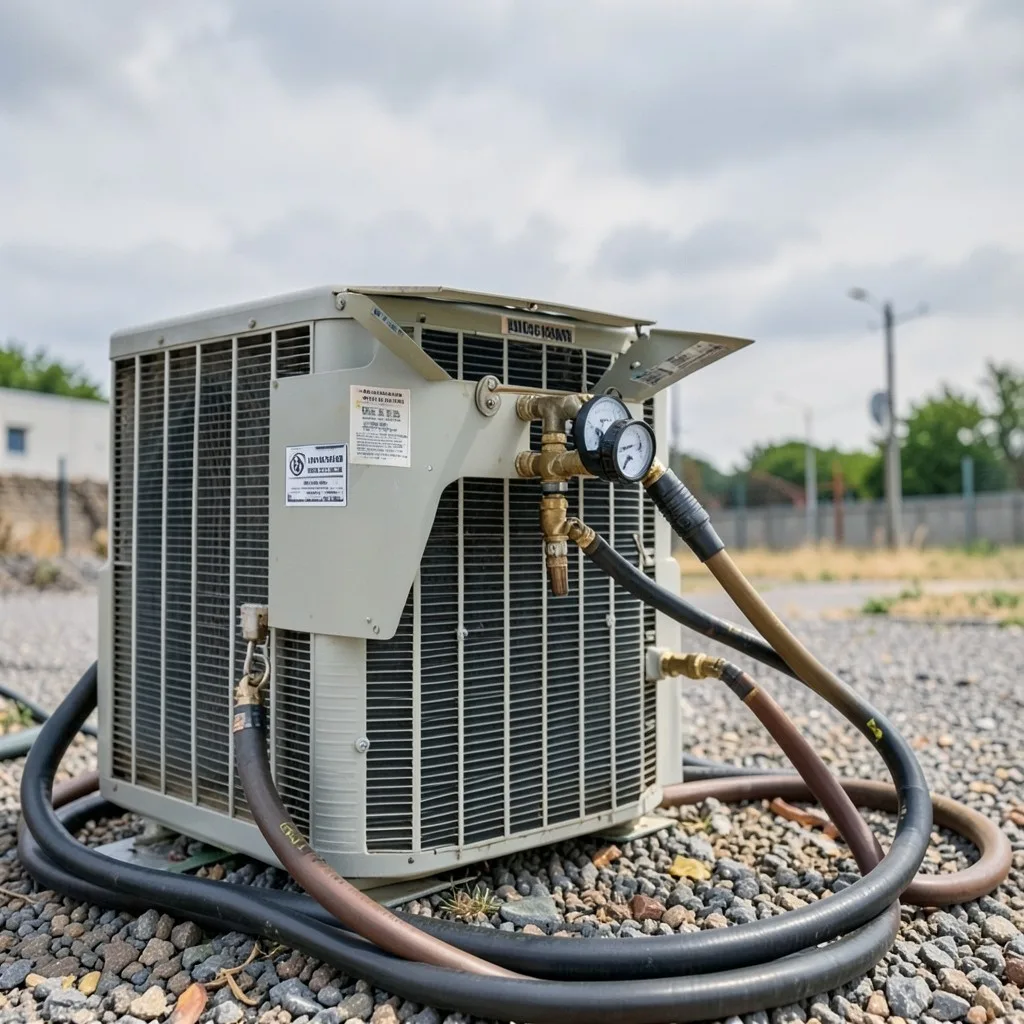
What does Marshfield do to heating and cooling equipment?
Equipment around Marshfield lives between 10°F winters and 86°F summers. The annual load — roughly 5,700 heating degree days against 650 cooling — is the quiet arithmetic behind local sizing, local failure timing, and the local repair queue. Sea-tempered summers with humid spells; raw coastal winters with wind-driven heat loss. Both arrive every year.
What hangs in local utility closets is as regional as the weather. Forced-air gas systems mix with oil boilers inland and electric baseboard in seasonal homes; salt air shortens outdoor-unit life near the coast. Most of the surrounding housing dates to roughly 1968 — 58 years of duct settling and envelope drift that a good contractor reads as quickly as the equipment label.
Coverage in this network is zip-code precise: Marshfield routing spans the local zip code, matched to independent contractors licensed for Massachusetts. Calls route during extended business hours; after-hours coverage depends on which local contractors run on-call rotations.
Marshfield is a single-zip market in this network — one zip code with both heating and cooling lines, and duct services active. The contractors registered here typically also work Lakeville and Green Harbor, so a truck is rarely more than one town away. That local bench is why the fee gets quoted before dispatch instead of after arrival: the contractor answering already knows what a Marshfield AC repair call involves.
What are Marshfield homeowners describing — and what does it mean?
System runs but the air is not cold
Low refrigerant from a leak, a failed compressor or condenser fan, or a heavily fouled outdoor coil rejecting no heat.
Ice on the refrigerant lines or indoor coil
Airflow starvation (filter, blower) or low charge. Running it iced destroys compressors — shut it off and let it thaw.
Outdoor unit hums but the fan does not spin
Classic failed capacitor — one of the cheapest and most common AC repairs there is.
Breaker trips when the AC starts
Hard-starting compressor, shorted wiring, or a seized fan motor. Repeated resets risk turning a repair into a replacement.
Water around the indoor unit
A clogged condensate drain or rusted pan — minor today, ceiling damage next month.
It cools, but runs all day and the bill shows it
Marginal charge, dirty coils, duct leakage, or an aging compressor limping below capacity.
Calling from Marshfield — what are the four steps?
-
Describe the cooling failure
Tell us what quit: the whole system, just the outdoor fan, or the cold itself. That detail routes your Marshfield call to the right crew the first time.
-
An AC contractor covering Marshfield
You reach an independent Massachusetts company — EPA-certified for refrigerant work — whose service area covers your zip, in a market sized around 86°F design heat.
-
Costs stated before booking
Diagnostic pricing is quoted during the call, and in peak season so is the realistic arrival window.
-
Most failures die on visit one
The common culprits are stocked and swapped same-visit. If the diagnosis is compressor-grade, you get options on paper, not pressure.
How does ac repair pricing work in Marshfield?
Pricing is set by the independent contractor — never by us — and the ground rules are the same on every call we route: the diagnostic fee is stated on the phone before dispatch, any after-hours premium is named up front, and you receive a written quote you can compare against any other bidder before authorizing work.
That structure isn't generosity — it's how the network stays healthy. A Massachusetts contractor who surprises homeowners at the doorstep stops receiving routed calls, which means the pros who remain are the ones whose pricing conversations survive daylight. You benefit from that selection every time you dial.
| What to expect | When | Why it matters |
|---|---|---|
| Diagnostic fee disclosed | On the phone, before dispatch | No doorstep surprises — the visit price is known before a truck rolls |
| Findings shown, not described | During the visit | The failed part and its readings, in front of you |
| Written quote | Before any work begins | Yours to keep and shop — comparison is expected here |
| After-hours premium named | When you book | Night and weekend rates stated before you commit |
Researching typical national figures first? Read AC Repair Costs: From Capacitor to Compressor — the itemized national breakdown, kept separate from this routing service.
The Marshfield seasonality problem, used to your advantage
Marshfield sits in a winter-peak market — the serious rush comes once a year, and pricing follows availability. Off-peak, diagnostic slots are same-day and premiums rare; at peak, after-hours rates apply more often simply because daytime calendars are full.
If the system does fail at peak, say so plainly when you call — symptom, occupants, indoor temperature. Triage is real, and accurate detail moves genuine emergencies up the queue honestly. Either way, the calendar is a price lever most homeowners never think to pull.
One more calendar note specific to this market: with a median local home vintage around 1968, whole neighborhoods share equipment generations — and when a cohort ages out, replacement demand spikes together. Homeowners who quote a season ahead of their system's statistical retirement buy from a calm market; the neighbors who wait buy from a rushed one.
Losing the fight with the heat?
Get ahead of the Marshfield peak-season queue — the earlier the call, the earlier the slot.
Call (877) 565-3062Repair or replace — how should a Marshfield contractor frame it?
Age is the axis everything turns on. Equipment in its first decade earns repairs almost automatically — wear parts fail, get swapped, and the system runs on. Past the twelve-to-fifteen-year mark, each major component failure competes with replacement money: the part being replaced is the same age as every part that hasn't failed yet, and modern equipment would also cut every future utility bill.
Three findings should always trigger a replacement conversation rather than a quiet repair: a compromised heat exchanger on a furnace (the failure that ends them), compressor-grade work on an aging cooling system, and any major sealed-system repair on equipment running an obsolete refrigerant. A Massachusetts-licensed contractor who raises these honestly in Marshfield — with the failed part and its readings in front of you — is doing the job right. One who patches silently past them is selling you the same failure twice.
Which guides might save this Marshfield service call?
- AC Running but Not Cooling? Diagnose It Like a Tech — When the AC runs but the house stays warm: filter, breakers, outdoor unit, ice — the diagnostic order techs use, and which findings mean call now.
- AC Leaking Water Inside? Act Fast, Then Fix the Drain — Water around the indoor AC unit is usually a clogged condensate drain — minor today, ceiling damage next week. Emergency steps and the real fix.
- AC Breaker Keeps Tripping? Stop Resetting and Read This — An AC that trips its breaker is pulling more current than the circuit allows — hard starts, shorts, seized motors. Why repeat resets are the wrong move.
What to have ready when the contractor calls back
Techs solve faster with context. The five minutes before a Marshfield visit that pay for themselves:
- Pets secured and gate codes shared: the two most common arrival delays, both free to prevent.
- The symptom timeline: when it started, whether it comes and goes, and what (if anything) changed in the house right before.
- The filter situation: when it was last changed and its size — the answer redirects a surprising number of diagnoses.
- The electrical panel location — and whether any breaker has tripped during the failure.
- Any past paperwork: prior repair invoices or tune-up sheets turn guesswork into history.
- Your equipment labels: a phone photo of the data plate on the unit gives the contractor model and age before arrival.
Which terms will your Marshfield contractor use on this job?
Capacitor (HVAC)
An HVAC capacitor stores and releases electrical charge to start and smooth the running of the system’s motors — compressor, condenser fan, and blower. Capacitors weaken with heat and age, and a failed run capacitor is the single most common air-conditioning repair: the outdoor unit hums but the fan will not spin.
Refrigerant
Refrigerant is the working fluid of air conditioners and heat pumps — a chemical engineered to evaporate and condense at useful temperatures, absorbing heat indoors and releasing it outdoors as it cycles. It circulates in a sealed loop and is never consumed: a system low on refrigerant has a leak, not a thirst.
Evaporator Coil
The evaporator coil is the indoor coil of an air conditioner or heat pump, mounted in the air handler or above the furnace. Liquid refrigerant evaporates inside its tubing, absorbing heat from the air the blower pushes across it — that heat-robbed air is the "cold air" at your vents. The absorbed heat travels in the refrigerant to the outdoor unit for disposal.
Condenser
The condenser is the outdoor unit of an air conditioner or heat pump. Inside its cabinet, hot refrigerant vapor from the house is compressed, then condensed back to liquid as the big fan pulls outdoor air across the coil — dumping the heat collected indoors into the outside air. Compressor, condenser coil, and fan form the heat-rejection half of the cooling cycle.
Every term links to its full glossary entry — the practical homeowner angle included. All 50 terms →
How to verify the pro who shows up
Every contractor in this network is an independent Massachusetts business responsible for its own licensing, insurance, and workmanship — and every legitimate pro expects to be verified. The checks below take five minutes and filter out nearly every bad outcome in residential HVAC:
- Check the labor warranty in writing — 1–2 years on repairs is standard; "we stand behind our work" is not a term.
- Get the diagnostic fee and its terms (does it credit toward the repair?) stated before the visit is booked.
- Compare at least one competing bid on any major repair or replacement. Contractors who earn jobs on scope expect this; the ones who resent it are telling you why.
- Insist on the failed part being shown and the fix explained — techs who diagnosed correctly enjoy this part.
- Confirm the license: ask for the number and check it against Massachusetts's contractor licensing authority before work begins.
None of this is adversarial — it's how good contractors prefer to work. A Massachusetts pro who quotes fees on the phone, shows the failed part, and writes scope you can shop has nothing to fear from a checklist; the visit simply goes faster with an informed homeowner on the other side of it. The rare contractor who bristles at verification has answered the most important question before any work began.
AC Repair in Marshfield — common questions
Does an older AC using R-22 change the repair math?
Substantially. R-22 production ended in 2020; remaining supply is reclaimed stock at painful prices, and any R-22 system is at least 15 years old. Most refrigerant-side repairs on R-22 equipment fail a basic cost-benefit test against replacement with a modern high-efficiency unit — often 30–50% cheaper to run.
How much refrigerant should an AC lose per year?
None. Refrigerant circulates in a sealed loop; it is not consumed like fuel. If a technician says you are "a pound low," you have a leak, and recharging without repairing it is a subscription, not a fix. Ask for a leak search — electronic detection, dye, or a nitrogen pressure test — before agreeing to a top-up.
Why does my breaker trip every time the AC kicks on?
A compressor drawing locked-rotor amps (hard starting), a shorted motor winding, or a wiring fault. Resetting the breaker over and over is the worst response — breakers trip to prevent fires and burned windings. One reset is a test; repeated trips are a service call with the system left off.
Is it bad to keep running an AC that is not cooling well?
Yes, genuinely. A system running with ice on the coil or low charge is cooking its compressor — the one component whose failure typically totals the unit. If you see ice, shut cooling off, run the fan to speed the thaw, and book service. Limping through a heat wave can turn a bottom-of-the-ladder repair into a full system replacement.
Why do AC failures in Marshfield cluster in the hottest weeks?
Because sea-tempered summers with humid spells push every marginal part to its limit at once: a capacitor at 60% of rating survives May and dies in the first real heat wave. With roughly 650 cooling degree days a year in this market, the smart move is fixing known-weak parts in spring, when parts and slots are both cheap.
What kind of HVAC equipment is common in Marshfield homes?
Forced-air gas systems mix with oil boilers inland and electric baseboard in seasonal homes; salt air shortens outdoor-unit life near the coast. The median local home dates to about 1968, so contractors here spend as much time on the distribution side — ducts, airflow, controls — as on the equipment itself.
Does weather here really change what AC repair costs?
Indirectly but reliably. With 5,700 heating and 650 cooling degree days a year, local failures cluster around first-stress weather — and when every truck in Marshfield is booked, after-hours premiums and multi-day queues do the pricing. The same job in shoulder season books same-day at standard rates.
Who actually shows up when I call?
An independent, third-party contractor whose registered service area covers your MA zip code — not an out-of-market call center crew. We are a referral service: the contractor sets pricing, runs the visit, and answers for the work, and you owe nothing for the connection itself.
Prefer a callback from a Marshfield pro?
Same zip-matched routing as the phone line — an independent Massachusetts contractor calls you, fee quoted before any visit.