
Furnace Repair in Gay, WV
When furnace repair can't wait in Gay, the shortest path is a contractor who already knows this market — where heating here is engineered against design lows near 8°F and cold Appalachian winters write the service calendar. This line routes by zip code to an independent WV-licensed pro, states the diagnostic fee before booking, and leaves the hiring decision with you.
Climate figures rounded from NOAA 1991–2020 normals for Charleston, WV; design temperatures are regional planning values. See our methodology.
Local conditions, local failure patterns
Equipment around Gay lives between 8°F winters and 90°F summers. The annual load — roughly 4,500 heating degree days against 1,000 cooling — is the quiet arithmetic behind local sizing, local failure timing, and the local repair queue. Muggy valley summers; cold Appalachian winters. Both arrive every year.
Housing stock matters as much as weather. The typical owner-occupied home in this market dates to around 1962 — call it 64 years of duct settling, envelope drift, and at least one equipment generation already lived and died. Gas furnaces dominate an older housing stock; steep terrain and long rural runs make contractor coverage — and response time — a real differentiator.
In Gay, routing runs on extended business hours, with same-day priority for no-heat and no-cool calls. Coverage is matched at the zip-code level (one zip locally), so the contractor who answers actually drives this area.
In network terms, Gay runs as a single-zip market: both heating and cooling lines registered across the local zip. The contractors registered here typically also work South Charleston and Alum Creek, so a truck is rarely more than one town away. For you that means furnace repair routes to someone who priced this exact market — not a national estimate with your city name pasted in.
What Gay homeowners describe — and what it usually means
Furnace runs but blows cool or lukewarm air
Often a failed ignitor, a flame sensor shutting the burners down, or a gas valve issue — the blower keeps moving unheated air.
Starts, then shuts off within a few minutes
Short-cycling usually points to an overheating heat exchanger, a clogged filter choking airflow, or a faulty limit switch.
Clicking at startup but no ignition
The ignition system is trying and failing — hot-surface ignitors and spark electrodes are among the most common furnace repairs.
Squealing, grinding, or rumbling
Blower bearings, a failing inducer motor, or delayed gas ignition. Grinding metal and boom-like ignition sounds justify shutting the unit off.
Thermostat calls for heat, nothing happens
Could be as small as a tripped float switch or door-panel safety, or as serious as a failed control board.
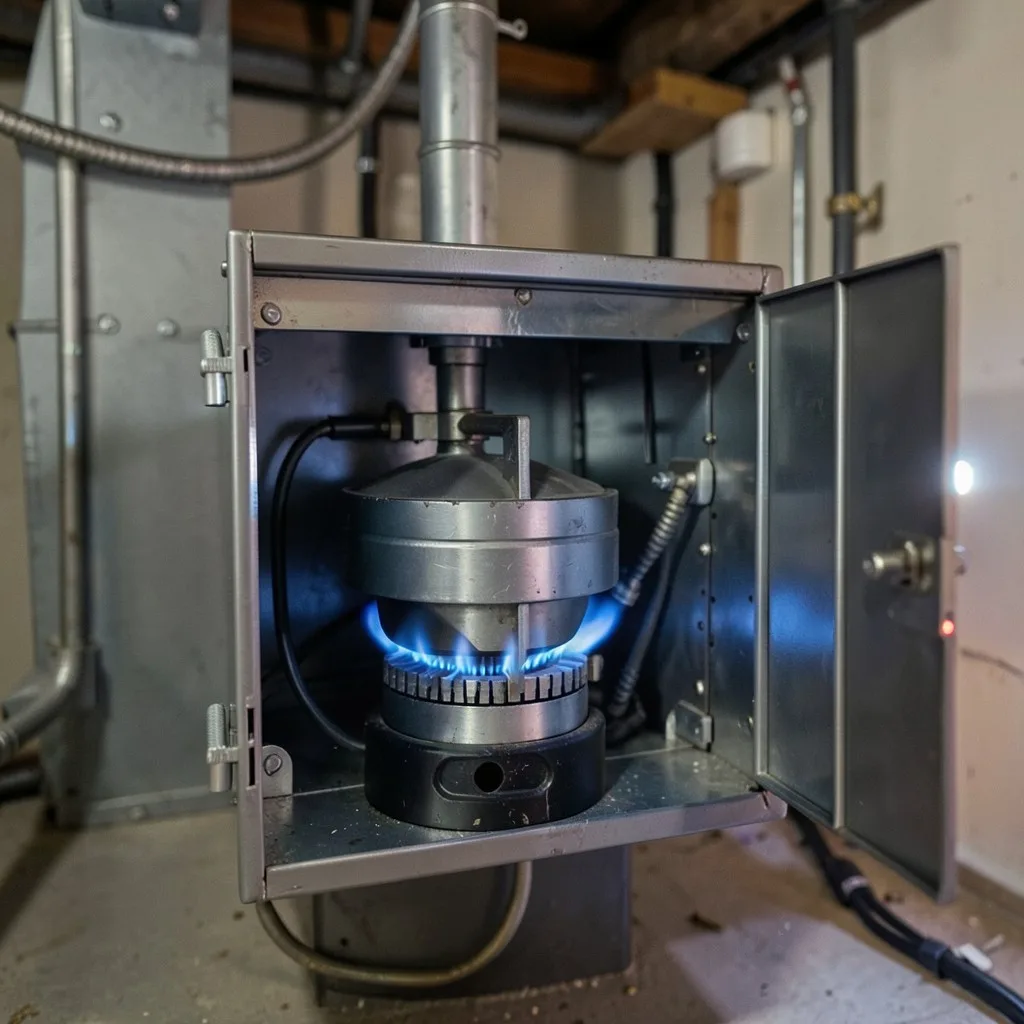
Burner flame is yellow or flickering instead of steady blue
Incomplete combustion — a cleaning and combustion-air problem at best, a cracked heat exchanger at worst. Treat with urgency.
Calling from Gay: the four steps
-
Say what the heat is doing
Cold air from the vents, a system that clicks and quits, a thermostat calling into silence — thirty seconds of description routes a Gay call correctly.
-
Routed inside WV
Coverage is matched at the zip-code level: the contractor answering works Gay regularly and handles the system types common to this market. Calls route through extended business hours.
-
Fee named before the truck moves
The diagnostic fee — and any after-hours premium — is stated on the phone, before dispatch. If that number does not work for you, the call costs nothing.
-
Decision stays with you
The contractor shows you the failed part and the price. On older equipment you get the honest replacement conversation instead of a parts subscription.
How furnace repair pricing works in Gay
Pricing is set by the independent contractor — never by us — and the ground rules are the same on every call we route: the diagnostic fee is stated on the phone before dispatch, any after-hours premium is named up front, and you receive a written quote you can compare against any other bidder before authorizing work.
That structure isn't generosity — it's how the network stays healthy. A West Virginia contractor who surprises homeowners at the doorstep stops receiving routed calls, which means the pros who remain are the ones whose pricing conversations survive daylight. You benefit from that selection every time you dial.
| What to expect | When | Why it matters |
|---|---|---|
| Diagnostic fee disclosed | On the phone, before dispatch | No doorstep surprises — the visit price is known before a truck rolls |
| Findings shown, not described | During the visit | The failed part and its readings, in front of you |
| Written quote | Before any work begins | Yours to keep and shop — comparison is expected here |
| After-hours premium named | When you book | Night and weekend rates stated before you commit |
Researching typical national figures first? Read Furnace Repair Costs by Part and Problem — the itemized national breakdown, kept separate from this routing service.
Timing a furnace repair call in Gay
The local heating season sets the rhythm: around Charleston, cold Appalachian winters concentrate failures into narrow windows, and the first hard cold snap converts every deferred repair in the area into a same-week emergency simultaneously. Booking against that calendar — shoulder season for planned work, first-symptom for repairs — is the cheapest optimization available.
If the system does fail at peak, say so plainly when you call — symptom, occupants, indoor temperature. Triage is real, and accurate detail moves genuine emergencies up the queue honestly. Either way, the calendar is a price lever most homeowners never think to pull.
One more calendar note specific to this market: with a median local home vintage around 1962, whole neighborhoods share equipment generations — and when a cohort ages out, replacement demand spikes together. Homeowners who quote a season ahead of their system's statistical retirement buy from a calm market; the neighbors who wait buy from a rushed one.
No heat in Gay?
The earlier the call, the earlier the slot — and in freezing weather, hours matter for more than comfort.
Call (800) 555-0100Repair or replace? How a Gay contractor should frame it
Age is the axis everything turns on. Equipment in its first decade earns repairs almost automatically — wear parts fail, get swapped, and the system runs on. Past the twelve-to-fifteen-year mark, each major component failure competes with replacement money: the part being replaced is the same age as every part that hasn't failed yet, and modern equipment would also cut every future utility bill.
Three findings should always trigger a replacement conversation rather than a quiet repair: a compromised heat exchanger on a furnace (the failure that ends them), compressor-grade work on an aging cooling system, and any major sealed-system repair on equipment running an obsolete refrigerant. A West Virginia-licensed contractor who raises these honestly in Gay — with the failed part and its readings in front of you — is doing the job right. One who patches silently past them is selling you the same failure twice.
Guides that might save this Gay service call
- Furnace Blowing Cold Air? Run These Checks in Order — A furnace blowing cold air is usually the thermostat fan setting, a clogged filter, or a failed ignition part. The check sequence, from free to pro.
- Furnace Smells, Decoded: Dust, Ozone, Gas, or Trouble — Burning dust is normal for a day; gas, electrical, and chemical smells are not. Every furnace odor decoded, with the ones that mean leave the house.
Five minutes of prep that speeds the whole visit
A prepared homeowner shortens the diagnosis and sharpens the quote. Before your furnace repair visit in Gay, pull together:
- Your equipment labels: a phone photo of the data plate on the unit gives the contractor model and age before arrival.
- Clear access: a path to the equipment, the attic hatch, or the crawlspace door saves billable minutes on arrival.
- Pets secured and gate codes shared: the two most common arrival delays, both free to prevent.
- The symptom timeline: when it started, whether it comes and goes, and what (if anything) changed in the house right before.
- The filter situation: when it was last changed and its size — the answer redirects a surprising number of diagnoses.
- The electrical panel location — and whether any breaker has tripped during the failure.
Terms your Gay contractor will use on this job
Hot-Surface Ignitor
A hot-surface ignitor is the ceramic element that lights most modern gas furnaces: it glows white-hot on command, igniting the gas as the valve opens — replacing the standing pilot lights of older designs. As a wear item that heats and cools with every burner cycle, it is the most frequently replaced part on a furnace, typically lasting three to seven years.
Limit Switch
The limit switch is a furnace safety control that monitors the temperature inside the unit and shuts the burners off if it overheats, while keeping the blower running to cool things down. Repeated limit trips produce short bursts of heat followed by cold-air purges — a pattern easily mistaken for a broken furnace.
Short-Cycling
Short-cycling is when heating or cooling equipment starts, runs briefly, shuts down, and repeats — cycles of a few minutes instead of steady runs. It multiplies the most damaging event in an equipment’s life (the start), degrades comfort and humidity control, and inflates energy use.
Gas valve
The gas valve is the electrically controlled valve that feeds fuel to a furnace’s burners — opening when the control board confirms the ignition sequence is safe, closing the instant flame is lost. Two-stage and modulating valves can also throttle flow, letting the furnace run at partial fire for quieter, steadier heat.
Every term links to its full glossary entry — the practical homeowner angle included. All 50 terms →
How to verify the pro who shows up
Referral routing gets a qualified contractor on your phone; the vetting is still yours to do, and good contractors respect customers who do it. In West Virginia, five minutes covers it:
- Compare at least one competing bid on any major repair or replacement. Contractors who earn jobs on scope expect this; the ones who resent it are telling you why.
- Get the diagnostic fee and its terms (does it credit toward the repair?) stated before the visit is booked.
- Check the labor warranty in writing — 1–2 years on repairs is standard; "we stand behind our work" is not a term.
- Ask for the certificate of insurance — liability and workers’ comp. A pro emails it in minutes; hesitation is the answer.
- For after-hours calls: the premium structure quoted on the phone, parts billed at standard book prices.
None of this is adversarial — it's how good contractors prefer to work. A West Virginia pro who quotes fees on the phone, shows the failed part, and writes scope you can shop has nothing to fear from a checklist; the visit simply goes faster with an informed homeowner on the other side of it. The rare contractor who bristles at verification has answered the most important question before any work began.
Furnace Repair in Gay — common questions
Why does my furnace start and stop every few minutes?
Short-cycling is most often an overheating response: a clogged filter or blocked returns starve the heat exchanger of airflow, the limit switch trips, and the cycle repeats. It can also be a flame sensor that no longer proves the flame, an oversized furnace, or a thermostat placed in a warm draft. It shortens equipment life, so it is worth diagnosing early.
Is a furnace that will not ignite dangerous?
A furnace that fails to ignite is usually safe — modern controls lock out after failed ignition attempts precisely to prevent gas buildup. The dangerous scenarios are the opposite: a furnace that runs with a yellow, lazy flame, soot streaks, or a carbon monoxide alarm. Those justify shutting the system down and ventilating before anyone works on it.
Why is my heating bill up even though the furnace seems fine?
Gradual efficiency loss rarely announces itself. Common culprits: a filter overdue by months, duct leaks dumping heated air into an attic or crawlspace, a cracked or slipping blower belt on older units, or a furnace short-cycling below its efficient steady state. A tune-up plus a duct inspection usually finds the leak in the budget.
Should the repair include a combustion or CO check?
Yes — ask for it. Any competent tech working on a gas furnace should verify draft, inspect the visible heat exchanger, and check CO in the flue and supply air after the repair. If a contractor treats that as an exotic request, that tells you something.
How cold does it get in Gay, and what does that mean for heating?
Heating systems here are designed against winter lows near 8°F, across roughly 4,500 heating degree days a year. Cold Appalachian winters means a genuine no-heat failure is a same-day problem — and in freezing stretches, a pipe-protection problem too.
What kind of HVAC equipment is common in Gay homes?
Gas furnaces dominate an older housing stock; steep terrain and long rural runs make contractor coverage — and response time — a real differentiator. The median local home dates to about 1962, so contractors here spend as much time on the distribution side — ducts, airflow, controls — as on the equipment itself.
Does weather here really change what furnace repair costs?
Indirectly but reliably. With 4,500 heating and 1,000 cooling degree days a year, local failures cluster around first-stress weather — and when every truck in Gay is booked, after-hours premiums and multi-day queues do the pricing. The same job in shoulder season books same-day at standard rates.
Who actually shows up when I call?
An independent, third-party contractor whose registered service area covers your WV zip code — not an out-of-market call center crew. We are a referral service: the contractor sets pricing, runs the visit, and answers for the work, and you owe nothing for the connection itself.
Prefer a callback from a Gay pro?
Same zip-matched routing as the phone line — an independent West Virginia contractor calls you, fee quoted before any visit.