
Ductwork Repair in Harwich Port, MA
Ductwork repair in Harwich Port starts with one honest question: who actually covers your address? This network answers it by zip code — an independent Massachusetts contractor registered for this territory, working a climate where raw coastal winters with wind-driven heat loss and where heating here is engineered against design lows near 10°F. Fee stated up front; competing bids welcome.
Climate figures rounded from NOAA 1991–2020 normals for Brockton/Plymouth, MA; design temperatures are regional planning values. See our methodology.
Local conditions, local failure patterns
Around Harwich Port, the climate ledger reads 5,700 heating degree days to 650 cooling — a heating-dominated market by any measure. Local design practice plans for 86°F summer peaks and 10°F winter lows, which is why the calls that cannot wait come in winter.
Housing stock matters as much as weather. The typical owner-occupied home in this market dates to around 1968 — call it 58 years of duct settling, envelope drift, and at least one equipment generation already lived and died. Forced-air gas systems mix with oil boilers inland and electric baseboard in seasonal homes; salt air shortens outdoor-unit life near the coast.
In Harwich Port, routing runs on extended business hours, with same-day priority for no-heat and no-cool calls. Coverage is matched at the zip-code level (one zip locally), so the contractor who answers actually drives this area.
In network terms, Harwich Port runs as a single-zip market: duct services registered across the local zip. This territory overlaps routes through Onset, Mansfield, Wrentham — established service country, not the edge of anyone's map. For you that means ductwork repair routes to someone who priced this exact market — not a national estimate with your city name pasted in.
What Harwich Port homeowners describe — and what it usually means
One room never conditions no matter the thermostat
A crushed, kinked, or disconnected branch run — common where flex duct meets foot traffic or settling.
Whistling or rushing air sounds at registers
Undersized or leaking ducts running high static pressure.
Attic or crawlspace is oddly warm in winter / cool in summer
You are conditioning it — supply leaks dump paid-for air outside the living space.
Dust returns immediately after cleaning
Return-side leaks inhale from attics and crawlspaces, bypassing the filter entirely.
New equipment underperforming
A modern system pushing through failed ducts inherits every old problem — measurement finds it fast.
What to expect when you call
-
The symptom map
Rooms that never condition, dust that returns overnight, whistling registers — the pattern in your Harwich Port house narrows the diagnosis before anyone arrives.
-
The distribution-side pro
An independent Massachusetts contractor equipped to inspect, test, and repair ductwork — the half of HVAC most companies only glance at.
-
Measurement before money
The test comes before the quote: measured leakage, documented condition, then a scope you can compare across bidders.
-
Proof, then payment
Sealing and repairs end with an after-measurement against the before — proof the fix worked, on paper.
How ductwork repair pricing works in Harwich Port
Pricing is set by the independent contractor — never by us — and the ground rules are the same on every call we route: the diagnostic fee is stated on the phone before dispatch, any after-hours premium is named up front, and you receive a written quote you can compare against any other bidder before authorizing work.
That structure isn't generosity — it's how the network stays healthy. A Massachusetts contractor who surprises homeowners at the doorstep stops receiving routed calls, which means the pros who remain are the ones whose pricing conversations survive daylight. You benefit from that selection every time you dial.
| What to expect | When | Why it matters |
|---|---|---|
| Diagnostic fee disclosed | On the phone, before dispatch | No doorstep surprises — the visit price is known before a truck rolls |
| Findings shown, not described | During the visit | The failed part and its readings, in front of you |
| Written quote | Before any work begins | Yours to keep and shop — comparison is expected here |
| Scope itemized | In the quote | Model numbers and labor scope in writing |
Researching typical national figures first? Read Ductwork Repair, Sealing & Replacement Costs — the itemized national breakdown, kept separate from this routing service.
Timing a ductwork repair call in Harwich Port
Harwich Port sits in a winter-peak market — the serious rush comes once a year, and pricing follows availability. Off-peak, diagnostic slots are same-day and premiums rare; at peak, after-hours rates apply more often simply because daytime calendars are full.
The practical move: treat the first mild-weather symptom — longer cycles, new noises, weaker output — as the booking trigger. Planned work quoted in the off-season gets sharper bids, because installers are filling calendars instead of rationing them.
One more calendar note specific to this market: with a median local home vintage around 1968, whole neighborhoods share equipment generations — and when a cohort ages out, replacement demand spikes together. Homeowners who quote a season ahead of their system's statistical retirement buy from a calm market; the neighbors who wait buy from a rushed one.
Stop paying to condition the attic
Duct leaks are found by instruments, not guesses. One call books the test.
Call (800) 555-0100Fix the distribution before blaming the equipment
Airflow and envelope problems masquerade as equipment failures constantly: rooms that never condition, systems that run endlessly, bills that creep with no rate change. The equipment gets blamed because it's visible — but the ducts, the returns, and the insulation above the ceiling decide how much of the equipment's output ever reaches the living space.
This is why measurement-first contractors win here. A leakage test or static-pressure reading turns the invisible half of the system into numbers, the scope gets written against those numbers, and the after-measurement proves the fix. Distribution work done this way routinely outperforms an equipment upgrade on comfort per dollar — and it makes any future equipment purchase smaller.
Guides that might save this Harwich Port service call
- Hot Upstairs, Cold Downstairs: Fixing Uneven Temperatures — Rooms that never match the thermostat are usually a distribution problem — ducts, returns, stack effect — not equipment. The fix hierarchy, cheapest first.
What to have ready when the contractor calls back
Techs solve faster with context. The five minutes before a Harwich Port visit that pay for themselves:
- The symptom timeline: when it started, whether it comes and goes, and what (if anything) changed in the house right before.
- Your equipment labels: a phone photo of the data plate on the unit gives the contractor model and age before arrival.
- The filter situation: when it was last changed and its size — the answer redirects a surprising number of diagnoses.
- Clear access: a path to the equipment, the attic hatch, or the crawlspace door saves billable minutes on arrival.
- The electrical panel location — and whether any breaker has tripped during the failure.
- Pets secured and gate codes shared: the two most common arrival delays, both free to prevent.
Terms your Harwich Port contractor will use on this job
Static Pressure
Static pressure is the resistance the blower must overcome to push air through the duct system — HVAC’s blood pressure, measured in inches of water column. Most residential equipment is designed for about 0.5 inches total external static; real systems routinely measure far higher, meaning the blower is straining against undersized or restrictive ducts.
Plenum
A plenum is the sheet-metal distribution box that connects HVAC equipment to the duct system. The supply plenum sits on the equipment’s outlet, receiving all conditioned air before it branches into individual ducts; the return plenum collects incoming air just before the filter and blower. The AC’s indoor coil typically lives inside or atop the supply plenum.
MERV Rating
MERV (Minimum Efficiency Reporting Value) rates an air filter’s ability to capture particles, from 1 to 16 in residential contexts. MERV 8 catches dust and pollen; MERV 11 adds finer dust and pet dander; MERV 13 captures smoke and many virus-carrying droplets. Higher ratings filter better but resist airflow more.
Every term links to its full glossary entry — the practical homeowner angle included. All 50 terms →
Before you hire in Harwich Port: the five-minute check
Every contractor in this network is an independent Massachusetts business responsible for its own licensing, insurance, and workmanship — and every legitimate pro expects to be verified. The checks below take five minutes and filter out nearly every bad outcome in residential HVAC:
- Check the labor warranty in writing — 1–2 years on repairs is standard; "we stand behind our work" is not a term.
- Get the diagnostic fee and its terms (does it credit toward the repair?) stated before the visit is booked.
- Compare at least one competing bid on any major repair or replacement. Contractors who earn jobs on scope expect this; the ones who resent it are telling you why.
- Insist on the failed part being shown and the fix explained — techs who diagnosed correctly enjoy this part.
- Confirm the license: ask for the number and check it against Massachusetts's contractor licensing authority before work begins.
None of this is adversarial — it's how good contractors prefer to work. A Massachusetts pro who quotes fees on the phone, shows the failed part, and writes scope you can shop has nothing to fear from a checklist; the visit simply goes faster with an informed homeowner on the other side of it. The rare contractor who bristles at verification has answered the most important question before any work began.
Questions Harwich Port homeowners actually ask
Can bad ducts really negate a new high-efficiency system?
Arithmetic says yes: a 96% furnace pushing through ducts leaking 25% delivers ~72% of its heat to the living space — worse than an 80% furnace on tight ducts. This is why serious contractors test static pressure and leakage during replacement quotes, and why the duct question belongs in every equipment conversation.
How do I know if my ducts leak?
Symptoms suggest; measurement confirms. Suggestive: rooms that will not condition, dusty house despite good filters, high bills with normal equipment, a mysteriously warm attic in January. Confirmation is a duct-leakage test that pressurizes the system and measures loss — a modest flat-fee visit and the best diagnostic money in HVAC, because it converts guesswork into a number before and after repair.
What is duct sealing, and does tape work?
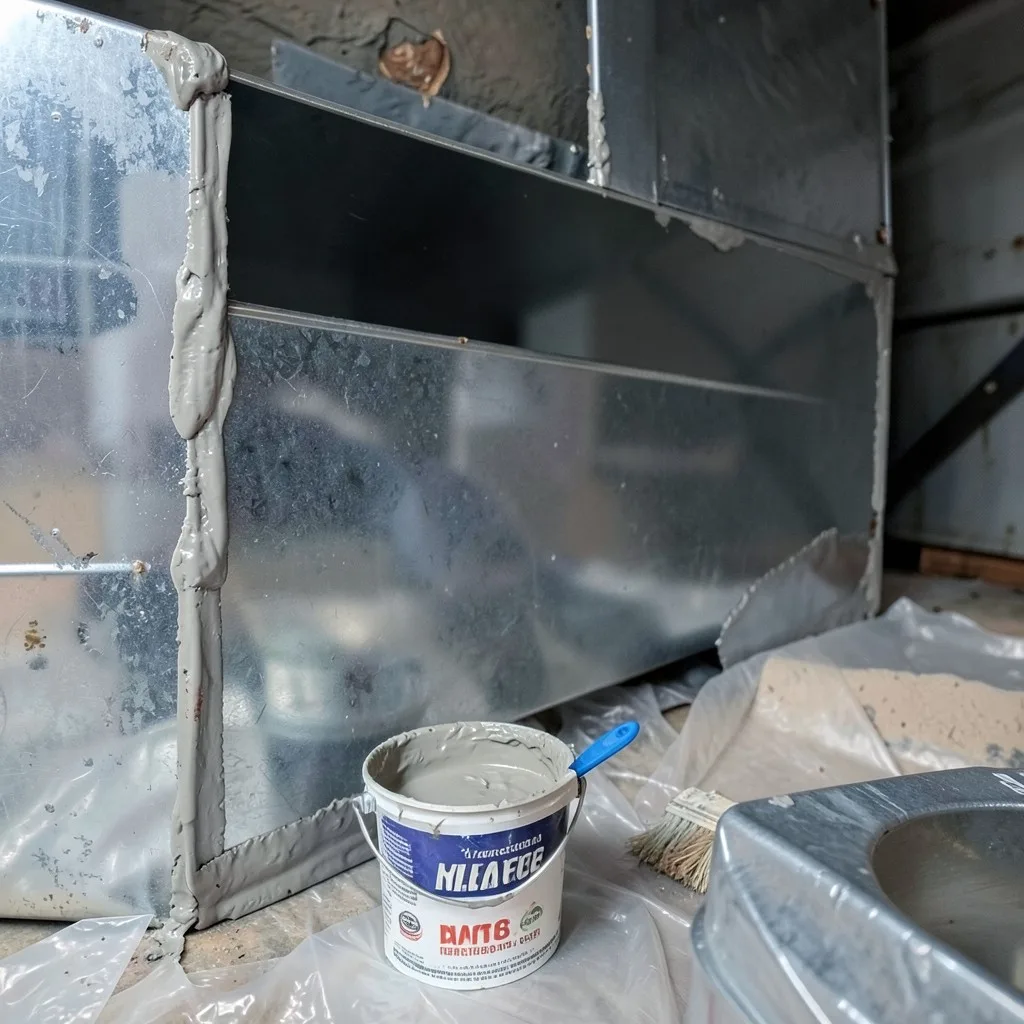
Professional sealing means mastic — a paint-on compound that hardens permanently over joints — or aerosolized polymer injected under pressure that plugs leaks from the inside. Cloth "duct tape," despite the name, fails on ducts within a year or two as adhesive bakes out; even foil UL-181 tape is a second choice to mastic on accessible joints. If a bid says "tape," read it as temporary.
Why is my return duct the one to worry about?
Supply leaks waste money; return leaks affect health. A leaking return running through an attic, garage, or crawlspace inhales from that space — insulation fibers, dust, humidity, car-exhaust and combustion byproducts in garages — and injects it downstream of nothing, because it bypasses the filter. Return-side sealing is usually the first priority for both air quality and safety.
Is a no-heat call in Harwich Port really an emergency?
Judge it by the numbers: local winters deliver raw coastal winters with wind-driven heat loss with design lows around 10°F. Below freezing, an unheated house risks pipe damage within hours, which moves a dead furnace from inconvenience to emergency. In milder spells, booking the first daytime slot usually saves the after-hours premium.
What kind of HVAC equipment is common in Harwich Port homes?
Forced-air gas systems mix with oil boilers inland and electric baseboard in seasonal homes; salt air shortens outdoor-unit life near the coast. The median local home dates to about 1968, so contractors here spend as much time on the distribution side — ducts, airflow, controls — as on the equipment itself.
When is the cheapest time to book ductwork repair in Harwich Port?
Off-peak. Locally that means late spring through early fall — the heating rush is when queues and premiums appear. Planned work quoted off-peak also gets sharper bids, since contractors are filling calendars rather than rationing them.
Am I committed to anything by calling?
No. The call connects you with an independent local contractor who quotes their diagnostic fee up front. You can book, decline, or take the quote shopping — contractors in this network expect comparison and earn jobs on scope and price, not on capturing your phone number.
Prefer a callback from a Harwich Port pro?
Same zip-matched routing as the phone line — an independent Massachusetts contractor calls you, fee quoted before any visit.